“De Indiaanen” in Weekblad voor kinderen ("The Indians" in Weekly for Children)
Item
- Title
- “De Indiaanen” in Weekblad voor kinderen ("The Indians" in Weekly for Children)
- Author
- Johannes Van Der Hey
- Date
- 1799
- Country / region
- The Netherlands
- Source language
- Dutch
- Time period
- 1780-1800
- Description
- Translation of a Dutch text which appeared in 1799 in a weekly that targeted an audience of children aged between six and twelve. Its content shows how problematic many late-18th-century European accounts of Indian ‘religion’ and society were and how these built on certain presuppositions about race and religion shared by the author and his young readers.
- Translated text
-
I
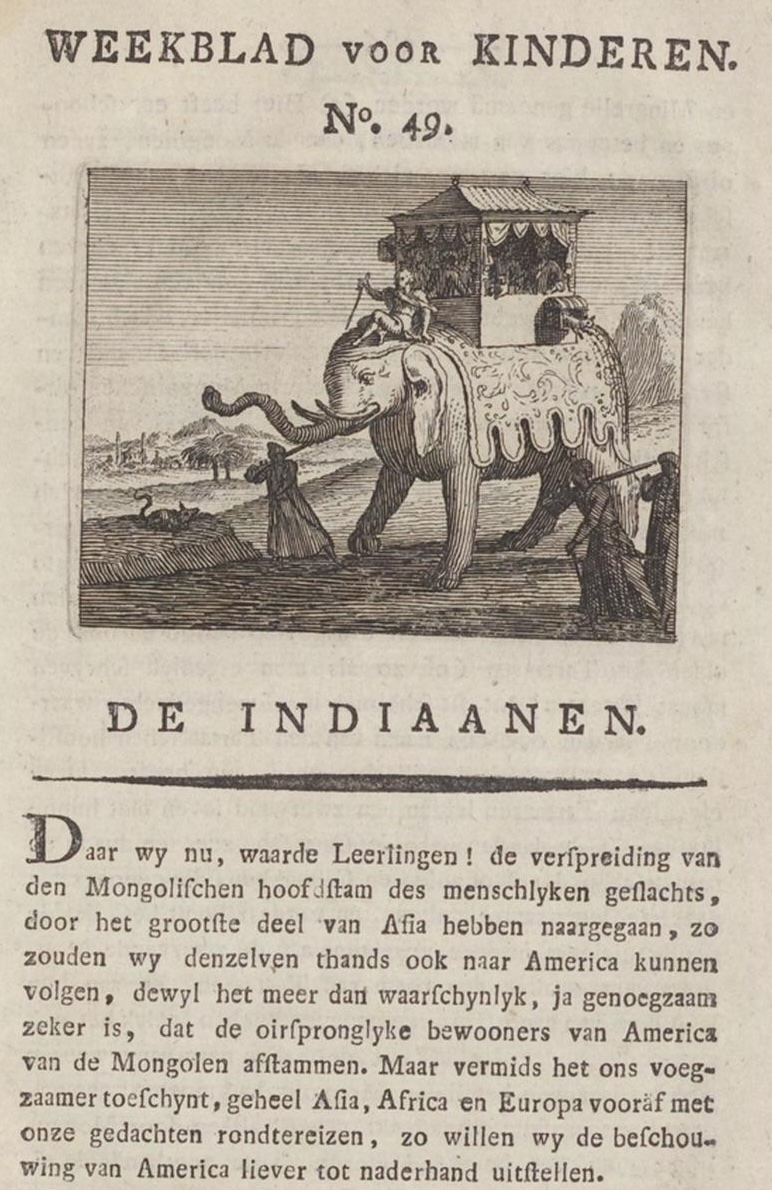
“Esteemed pupils, now that we have traced the spread of the Mongoloid principal tribe of the human race through the greatest part of Asia, we could follow the same to America, for it is more than probable, even sufficiently certain, that the original inhabitants of America also originate from the Mongols. However, since it appears more appropriate to first travel around all of Asia, Africa, and Europe with our thoughts, we will postpone our discussion of America.Let us focus our attention on the first and most ancient people, who lived in the beautiful lands south of the foothills of the Caucasus; in the lands now called Georgia, Circassia, and Mingrelia. Here, a more beautiful and better race of men than the Mongols has its origin; here, man shows himself with a greater and nobler attitude, more esthetic and pleasing facial features, a more lively and active intelligence, and a better and kinder heart, to which one may add as another characteristic that the male sex of these peoples has a nicer, broader and fuller beard than those of Mongoloid origin. One calls this more excellent race of humans the Caucasian or Tartarian main tribe of the human race. For, besides the fact that this race (with all the glamour of its original beauty) today still lives in the surroundings of the Caucasus, because of which this main tribe carries the name of Caucasian, the real Tatars also belong to this beautiful human race, because of which it received the name of the Tartarian main tribe of the human race. …
To avoid confusion, we will only use the … name … of the Caucasian tribe of the human race for this great race of humans. From time immemorial, this race has been divided into two genera, of which the first is called the Wendish, Slavonic or Sarmatian branch, while the second carries the name of the Gothic or Celtic branch. It is from this last branch that the most famous of nations, both ancient and contemporary, originated, which in capacities of body and soul surpass the rest of humankind. Since the nations of the Celtic branch have been the protagonists in the history of humankind and will be amply discussed later, we will only note now that the ancient and contemporary inhabitants of Asia Minor…, Greece, Italy, France, Spain, England, the Netherlands, Sweden, Norway, Denmark, and almost all of Germany are of Celtic origin. – Almost all peoples of Europa are fraternal peoples; what an outrage, then, that they behave so unbrotherly towards each other. – All the nations of the Celtic branch are white of skin, the most northern ones whiter than the southern ones. All have a beautiful and well-proportioned physique, regular facial features and a special aptitude for arts and sciences. …
While the Celtic branch of the Caucasian human tribe is undoubtedly the most exquisite part of the human race, some other nations originating from the Slavonic or Sarmatian branch became civilized earlier and united themselves into ordered societies. … Since most peoples of the Slavonic branch of humankind have gained little fame in history, we will have little occasion to discuss them, even though many of them deserve to be known better. Therefore, we will keep ourselves busy with them for some time, dear pupils! This may extend the duration of our great journey around the globe but will also make it more pleasant and useful. Of what use is a barren list of names of lands and nations? We should consider human beings, and as much as is possible all kinds of human beings, both those who are still on the lowest rungs of civilization and enlightenment and those who have climbed this ladder to a considerable height. Some peoples, who mean nothing to human history, are nevertheless worth seeing. Think, for instance, of the roaming Arabs who never appeared on the theatre of history and about whom we have mentioned so many remarkable peculiarities. Even more so, the Indian peoples deserve our perceptive attention, and since we will in the future have almost as little occasion to focus on these different nations as on the Chinese and Japanese, we will now inform you about some things concerning these peoples that merit your attention.
Under the name India, one usually understands the vast area delimited to the north by the Mongolian and Tibetan mountains, to the north-east by China, to the east and south by the Indian Ocean and to the West by Persia. In this remarkable expanse, much bigger than all of China, many very different peoples live of whom only those living in the western parts are the genuine Indians, or, as they are called in their own language, Hindus, after which these lands carry the name of Hindustan. … All these lands are extremely fertile and charming, excepting perhaps the peninsula of Malacca, which has an arid and barren look. Here a constant heat prevails, which is in some places too strong and too hot for man. Here the trees show off their cheerful foliage all year long and simultaneously carry flowers and fruits. Here, the rich womb of the earth is always open and gives birth to the noblest fruits with a mildness unknown in our colder regions.
[Then follows a long description of the geography, fauna, and flora of India.]
But what draws our attention to these regions are the human beings living there, who are believed to originate partially from the Slavonic branch of the Caucasian stem, and partially from the Mongolian stem. Indeed, these people, especially those of the real Hindustan, were united in early times in such peculiar societies, have such peculiar ceremonies, laws, and customs, such strange traditions, and such a wondrous mixture of good and bad mores, of wisdom and madness, that one who considers all of this cannot keep himself from shouting out: “What a wondrous creature man is and what cannot become of him.” – Our following discourse will give you some important evidence of this.
II
When one observes the vast, rich and beautiful lands of Hindustan and their inhabitants attentively, one sees with a tender grief that nature has here provided everything to make man good and happy, while man himself in these lands has used everything to plunge himself into misfortune. The greatest bond of human society, the main precondition without which humanity can never walk at a steady pace on the path towards self-perfection, is the original equality of men in their rights and duties. Almost everywhere the hunger for power of the shrewdest and the mightiest has broken this holy bond and instead imposed the stifling shackles of slavery to connect people to each other; almost everywhere one section of humanity has humiliated the other and used everything to prevent them from progressing towards perfection; but nowhere has this happened as openly, completely, and immutably as on the fertile banks of the Indus and the Ganges. Almost everywhere human beings are divided into ranks or classes, but these classes approach and mingle with each other from time to time, and those belonging to the lowest ranks at least have some hope to improve their condition over time; but in Hindustan this hope has been cut off completely.
The Hindus or real Indians are divided into tribes, which are called ‘Castes’ in that country. These are divided from each other by political and religious tenets, and the instituting of this segregation is older than all memorials and all lore of which we know. Men, whom we with good reason consider to be the foremost experts in these kinds of things, conclude for many weighty reasons that the prestigious or higher Castes of the Hindus originate from the Caucasian stem of the human race, while the lower Castes stem from the Mongols. Whatever may be the case, just consider what the Brahmins, who constitute the most important and sacred Caste among the Hindus, believe—or at least appear to believe—about this subject.
“The Supreme Being,” they claim, “created the main substances when It created Brama. This Brama is a unique, omnipresent, omniscient, immutable, and eternal being. He is the spirit of God, the governor of the universe and its creator. He created with his mouth wisdom, which is also called Brama, and to which the tribe of the Brahmins belong, whose job it is to learn, to pray, and to teach; with his arm he created the strongest, or the tribe of kings and warriors. From his belly and calves came food, by which one must understand farmers and merchants; and from his feet came slavery, or the tribe of artisans, slaves, and travelers. — Next, he created human beings, who were to constitute these tribes and belong to them; next the animals, plants, and lifeless things, the virtues and the vices. He also prescribed for each tribe its duties, which are contained in the sacred books of the Hindus. — Brama also appointed a king or ruler over the human beings whom he had created; but this first king had a vicious successor, who overthrew the established order by allowing and favoring the sacrilegious mingling of the four tribes, from which sprung a fifth tribe, and from this a multitude of other tribes. The embittered Brahmins killed this godless king; but from the rubbing of the right hand of his vanquished body sprung two sons, of whom one was a Brahmin and the other a Nair or warrior. Next, from the rubbing of the left hand of the defeated a daughter was born whom the Brahmins married to her brother the warrior, to whom they gave civil rule. This new king wanted to eradicate the fifth tribe with all its branches, but the Brahmins opposed this; and, therefore, all those who belonged to this fifth tribe were destined to practice certain sciences, arts, and crafts, they and their offspring for all eternity.”
Must one not be perplexed and filled with sadness when one sees that men who know such elevated truths as of God’s oneness, eternity, immutability, and omnipresence, as is clear from the above — that such men can also believe in such ridiculous tales. For even if these should be viewed as metaphorical images of now forgotten events or teachings, it still appears that their principal aim is to establish the inequality of estates among men for all time, by making the people revere their own chains as though these were forged by the Deity himself. The one who instituted these laws, who probably carried the name Brama, found it degrading to take civil governance into his own hands; instead, he handed it to another tribe, who appear to have been the most powerful next to his own tribe, and thus ensured their help and cooperation. Indeed, the division of Hindus into tribes, separated from each other in unbreakable fashion, shows the deepest depravity and the greatest antiquity of slavery. One knows of no case in which an Indian, not even one of the lowest and most despised Caste, has renounced or left his tribe, even though the unjust and offensive majority of the priestly tribe, or the Caste of Brahmins, above all castes, betrays the hunger for power of the lawgivers and their cool indifference towards the happiness of the entire nation.
The Brahmins appear, according to what we just mentioned about their feelings, to primarily understand by the word Brama God himself, insofar as He has revealed Himself to men or can be known by them. In the second instance, they appear to use Brama to refer to the first man, from whom all peoples on earth have sprung. And in the third place the shrewd and self-seeking lawgiver, from whom their strange institutions draw their origin, also appears to have had the name Brama. However it may be, one sees behind all these fictions some traces of the great truths regarding the eternal and unchanging existence of the Deity, the creation of the world, and the fall of the human race from its original state of innocence and happiness; — truths, of which we may with certainty assume that the most ancient peoples were not ignorant. And the Hindus certainly belong to those most ancient peoples. Of the deluge they have some knowledge or, at least, they suppose that it did not extend over Hindustan; a supposition which one may reasonably doubt since their country is not among the higher regions of the globe but is certainly located lower than Armenia and the other lands of the Caucasus, which were nevertheless hit by this devastating scourge, according to tradition.
The stories of the Hindus, given their antiquity, are excessively exaggerated and ridiculous. Even though they have lost the memory of the deluge, their gray antiquity and early civilization and formation into an ordered society appear, among other things, from the fact that the ancient Greeks, who travelled to India to learn wisdom from the Brahmins, could—much like us—only find the rubble and remnants of their past condition; for as far as the records of history stretch, the Hindus only appear as a nation dominated by foreign kings and peoples, much as they still are today. Also, the ancient traders got the same goods from Hindustan that we still receive from there. Thus, they practiced the same arts, namely the weaving of all kinds of cotton and other fabrics. If we may speculate about such an obscure matter, then the empire or society of the Hindus must have flourished already about 3000 years ago for several centuries; as a consequence, its constitutions have acquired such a rigidity and found such deep roots in the heart and character of this nation that innumerable invasions by foreign peoples, and 2500 years of subordination to foreign kings, have not succeeded at eradicating them. Let us also remark that the language of the Hindus, called Sanscrit, is extraordinarily beautiful, lovely qua pronunciation and neatly civilized, which offers incontrovertible evidence that the people who speak this language stem from ancestors who must have been highly civilized for a long time; for barbarous nations never dedicate themselves to the kind of labor oriented towards a discreet and fine taste, which could embellish and refine their languages. Apart from the Sanscrit the Brahmins have another so-called holy language, in which their sacred books are written and which they have refused to teach to anyone not belonging to their own tribe.
The laws of the Hindus very much subjugate women to men; in that regard they are similar to the laws of other Oriental peoples; but the laws of the Hindus go so far as to recommend as useful and honorable that a woman lets herself burn along with the body of her deceased husband; “if she does this,” these laws say, “then the highest heaven will be her abode”. What a cruel barbarism, which is all the more striking, since it exists among people who never kill a living creature, even including the filthiest vermin; people who chop of the hand or foot of those who kill an oxen, horse, camel, or hare and who impose fines on those who take the life of a tiger, a bear, or a snake. How could this cruel requisition arise among people who believe in the transmigration of souls! The Brahmins claim that the soul of a man, when he passes away, goes to inhabit another body; the soul of a good man in a human body of a highly esteemed tribe, or in the body of a pure animal, primarily a cow; but the soul of an evil man in that of an impure and harmful animal, a tiger, snake, crocodile, etc. If, therefore, a Brahmin killed an animal, he might make one of his family members, even his deceased father, die for a second time. Hence, before he sits down anywhere, he cleans this place with a corner of his robe and says as though to God: “As I have let my benevolence descend on an ant, so I hope you will have your benevolence descend on me.”
Since among the Hindus, as among most Orientals, one man can have several women, the fate of burning oneself with the body of the deceased is awarded as a special honor, only to the most beloved among his wives; and so huge and deeply rooted is the disastrous superstition of these wretched people that they do everything to battle for this dubious honor and repeatedly impose the most incredible trials of harshness to achieve that goal; for, under the rule of the Muhammadan kings of India, as in those regions where the supreme power is in the hands of Europeans, this inhumane burning of living humans is strictly prohibited.
The Caste of the Brahmins is the noblest and most prestigious among the Hindus and enjoys the highest privileges. This tribe consists of very beautiful people and, even though they are browner of skin than the Europeans, their cheeks are embellished with a lively blush. They lead an idle life, which is devoted exclusively to contemplation and observance of religious ceremonies. Their food consists of rice, vegetables, and fruits. They never eat meat, as can be inferred from the above. If a Soder, a member of the fourth tribe or Caste of slaves, sits down on the carpet of a Brahmin, then the law demands that the behind of this Soder must be perforated with a red-hot iron. So holy is a Brahmin considered here and so scandalously impure a useful laborer. When someone hits a Brahmin with his hand or kicks him with his foot, his hand or foot is chopped off. Killing a Brahmin is the weightiest crime of which one can make oneself guilty. A Brahmin will never be punished with death, no matter which evil he has committed; his harshest punishment is a brand on his forehead and irrevocable banishment from the Caste of the Brahmins, a punishment shared by all his progeny. Furthermore, the property of a Brahmin is sacred and may never pass into the hands of another, not even those of the king.
One could infer from all this that such great privileges of the Brahmins, above the members of other Castes, would make them proud and unruly, but that is not the case. Much like all other Hindus they are of a benevolent and gentle character, and they treat not only their fellow countrymen from the three other Castes…but even foreigners with kindness and humaneness. Primarily, this takes place in the few regions of the country which are not subjugated to Muslims or Christians.
III
The tribe or Caste of warriors is among the Indians the second in rank and status. It is spread all over India, under different names. The Rajas or minor kings of the Coromandel coast, of whom some of the luckiest have established minor states, belong to this tribe. In Malabar these people are called Nairs. They are stout well-built people, though generally less beautiful in color than the Brahmins. If we may rely upon the reports of some, then these people have no objection against eating meat, even beef, from which it would appear that they have another system of belief than the Brahmins, or that the strictness of the latter never to kill any living creature, and even less so to take its meat as food, was actually not a consequence of their belief in the despicable doctrine of the transmigration of souls, but of something else that is unknown to us; much as so many other customs and mores, which we find here and elsewhere, are nothing more than consequences of causes that have long ceased to exist. The Hindus of the Caste of warriors, who originally have an exclusive right to civil offices according to the Indian laws, are, according to the circumstances, either brave or effeminate, very superstitious, and given to committing robbery and violence, because of which they everywhere inspire fear. For this reason, anyone who has to travel through India on land hires one or more of these warriors for a hefty salary to protect them and those who belong to this Caste and live in Malabar accept this duty with steadfast loyalty; Yes, they would rather allow themselves to be cut into pieces than fail to defend or avenge the foreigner who is under their protection; for, if they betrayed his trust, their own kinsmen would tear them to pieces. Furthermore, there are entire peoples in India, such as the Marathas and the Canarins, who are only busy with warfare, and probably all originate from the Caste of warriors.
It is these two tribes or Castes of the Hindus, namely the Brahmins and the warriors, who are thought to be the pure descendants of the Caucasian main tribe of the human race. The two lower Castes, which we will now discuss, are thought to be of Mongoloid descent, or to originate from a mingling of both main tribes of humanity. Certain it is that their external appearance, color, and even intellectual capacities are lesser than those of the two higher Castes.
The tribe or Caste of farmers is among the Hindus the third in rank; and its members are described as industrious and good. To this Caste belong also those people who are used to dig wells and ponds and who have the exclusive right to do so; the people responsible for transporting all kinds of goods also belong to this Caste. In both professions, the women partake in the labor and are not treated by their husbands in humiliating ways, as is common among the higher Castes. So true it is that agriculture is the most natural occupation for human beings and the most suited to retain the original equality.
In actuality, the fourth tribe or Caste of Hindus consists or artisans and artists such as weavers, goldsmiths, etc. These people are not allowed to take up another profession than their ancestors. The son of a weaver must be a weaver, as must be his grandson. This is the natural reason as to why the arts of the Hindus stay at the same level of perfection that they once reached, and since this indissoluble connection to the rank and occupation of one’s ancestors also exists among all other Castes, this is the reason as to why the entire people has today the same appearance as the one it has had for many centuries, regardless of the many transfers of power they have undergone and the many changes of ruler.
According to the ancient laws of the Hindus, the tools of farmers or artisans, which they need for their profession, can never and under no pretext be forfeited. Because of the same laws, the rage of war never made these people more miserable than at other times. Their lands and occupations were equally sacred, and the farmer continued to pull the shining plough through the furrows even in close proximity to two warring armies. This is a beautiful ray of a humane art of politics among these people who are oppressed in so many other ways; these creatures who are forever wed to the same occupation and who are nevertheless forced to revere the idle Brahmins as higher beings from afar, without ever themselves being able to reach a higher dignity. For it is completely prohibited to the four great Castes of the Hindus to mingle with each other and someone can fall to a lower caste but can never climb to a higher caste.
Apart from these four Castes there is a fifth, consisting of the refuse of all others. Those who belong to this lowest Caste are condemned to the most despised activities; they bury the dead and transport the impure goods. They are denied access to temples and marketplaces; they are not even allowed to walk on streets inhabited by the Brahmins. When they accidentally touch someone who does not belong to their Caste, this man may kill them with impunity. They cannot possess or even rent any immovable property, but they are allowed to cultivate lands in servitude to others. One calls these people Parias, and in Malabar Pouliats. The latter generally cultivate paddy fields and have a kind of hut near these fields, where they hide whenever someone approaches them, or, if they lack the time or opportunity to do so, they prostrate one the ground with the most extreme humiliation to hide their faces. When night falls, they move near to markets to satisfy their needs, while making terrible noise; then the merchants approach them from a distance and find out what they need. Next, the merchants leave to get the requested goods, while the Pouliats leave the money on the ground. When the merchants have returned and taken the money and left the goods, they first leave and only then are the Pouliats allowed to take those goods, which they don’t do unless they are absolutely sure that no one will see them. What a hideous humiliation! Meanwhile, one says, there is an even more despised and humiliated kind of people called Poulichis, who have been ousted even by the Pouliats. These Poulichis must be the most wretched of all humans. The use of fire is prohibited to them; one does not allow them to build huts but compels them to live in a kind of nests in the forests and trees. When they are hungry, they howl like animals to elicit pity, and the kindest among the Hindus then lay down some food and next run away hurriedly so as not to contaminate their eyes by seeing these wretched people.
Here you have, dear pupils, a short report on the Hindus and some of the major peculiarities of this ancient nation that differs so much from us and that deserves our heartfelt pity in so many ways; a nation, which is generally very mild-mannered and benevolent as much as it is weak and lascivious; a nation, which because of its own prejudices, its humiliating distinctions of imagined ranks, and the repeated plunder and violence of several peoples, generally leads a miserable and most unenjoyable life in these most beautiful regions of the earth. How deeply this people is weighed down by the burden of superstition! We will give you one more terrible example and then you can join us in lamenting these wretched people.
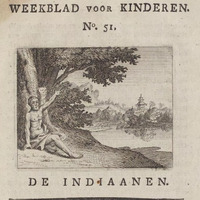
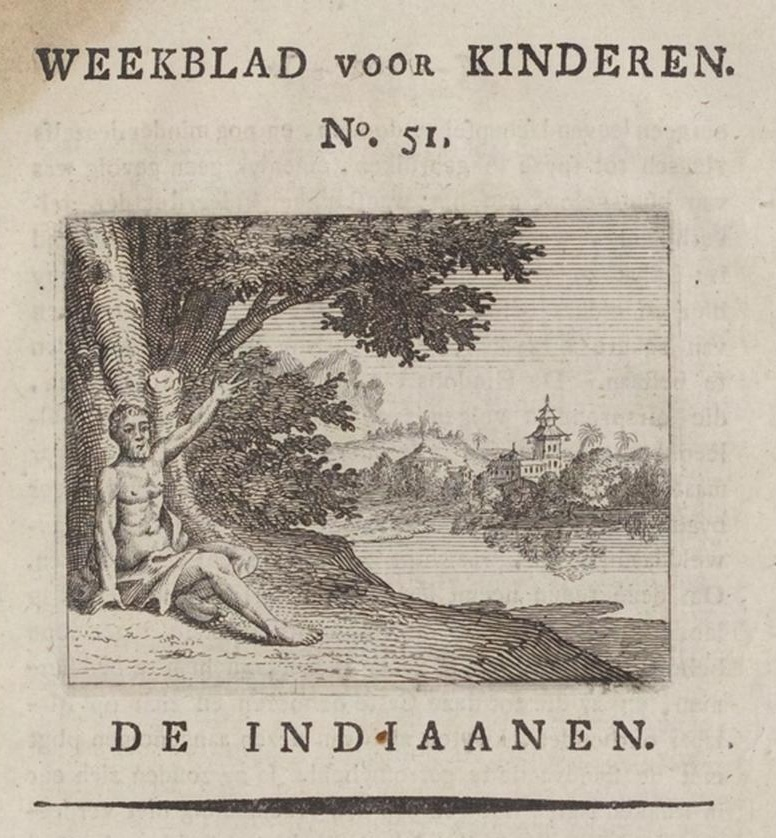
In Hindustan, people from all honorable tribes are free to adopt the way of life of the Brahmins to some extent by leading a kind of monastic life. These monks, called Yogis, offer striking evidence of the atrocities of superstition by means of the terrible torture that they inflict upon themselves. Sometimes they roam through open fields or live in the forests, or lie down on a dung heap, bent under the weight of their chains, with an injured body, macerated by blows, vigils, and fasts; all forms of self-torture which they voluntarily inflict upon themselves. Some of these people stand on one leg for years; others always sit at the foot of a tree while holding one of their arms up in the air, day and night, without ever changing their posture… Some of them live in cities but in miserable hovels, often near pagodas or idol temples. For, even though the Brahmins are convinced of the unity and spiritual existence of the Supreme Being, they continue to maintain the service of a multitude of idols with different names and of imagined worth.
Since most of the lands of Hindustan are ruled by Muhammadan kings and the coastal areas are often subjugated to European nations, it is now impossible for the Hindus to strictly keep to their laws and mores. Still, one should be amazed at the labor, dangers, costs, and difficulties, all of which they willingly undergo, merely to remain faithful to their old institutions. — In addition to this, a very corrupted Muhammadanism is now growing in all of India, especially among the peoples who live to the east and south of Hindustan…”
- Annotations
-
- This is a translation of a text titled “The Indians” (or “De Indiaanen” in Dutch), which appeared in 1799 in three issues of a Dutch weekly that targeted a readership of children aged between six and twelve. Published in Amsterdam, this weekly was received as “an appropriate handbook for the youth” and a summary of “what every member of a civilized society should know, from natural science, history and morals” (see van Vliet 2020).
- The text reflects what the author and publisher considered to be ‘knowledge’ about India in the late 18th century. Its content shows how problematic the then dominant accounts of Indian culture and society were and how these built on certain presuppositions about race and religion shared by the author and his young readers, but it also gives insight into the extent to which ideas from the late 18th-century European accounts of India have been reproduced as ‘facts’ about a people, culture, and society since then.
- A large part of the text consists of translated sections from L’Histoire des deux Indes by the Abbé Raynal and Denis Diderot, originally published in 1770. Other parts contain translations of sections from Nathaniel Halhed’s introduction to A Code of Gentoo Laws (Halhed): this was a translation into English of a Persian compilation produced by a group of Sanskrit pundits, who had been hired by the East India Company to compose and translate a digest of ‘Hindu law’.
- Complete title
- “De Indiaanen” in Weekblad voor kinderen, deel 2, nos. 49-51
- Author details
- Van Der Hey, Johannes, ?-1840
- Date of publication
- 1799
- Dates of travelling
- n.a.
- Publisher
- J. Van Der Hey
- Place of publication
- Amsterdam
- Archival source or library
- n.a.
- Locations in India
- n.a.
- Keywords
- caste, Hindus, Hinduism, religion, Brahmins, Brahma, God, Islam, race, tribe, Muslims
- Related literature
-
Raynal, Guillaume-Thomas. 1770. Histoire philosophique et politique des établissemens & du commerce des européens dans les deux Indes. Amsterdam.
Keppens, Marianne and Jakob De Roover. 2020. “The Brahmin, the Aryan, and the Powers of the Priestly Class: Puzzles in the Study of Indian Religion.” RELIGIONS 11 (4).
- Translator and copyright
- Jakob De Roover, 2025