
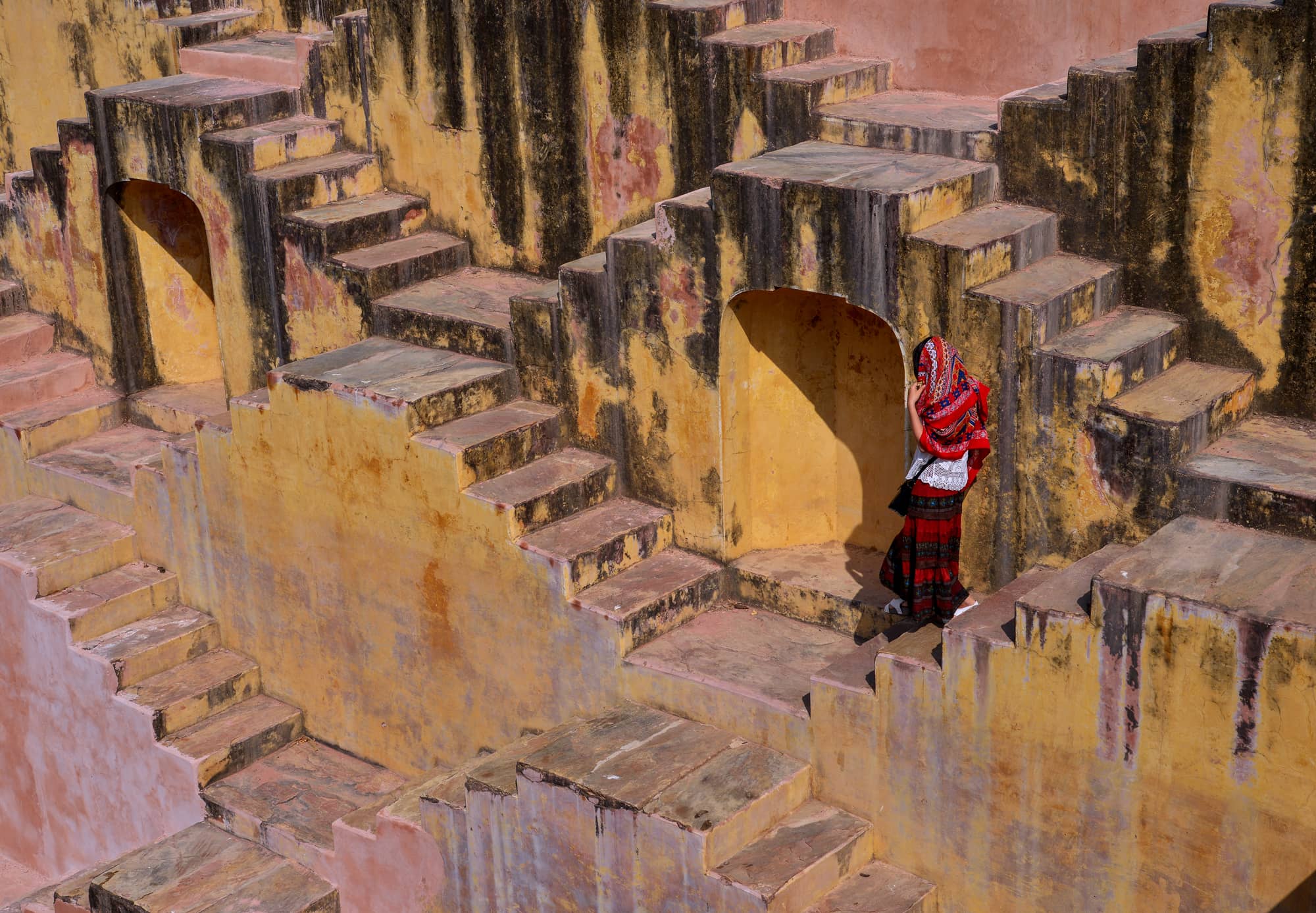
Moja pot v Indijo (My Journey to India)
Item
- Item Number
- 21
- Title
- Moja pot v Indijo (My Journey to India)
- Author
- Miriam Zalaznik
- Date
- 1930-1931
- Country / region
- Yugoslavia
- Source language
- Slovenian
- Time period
- 1920-1940
- Description
- A translation consisting of excerpts from a travelogue by the Slovenian missionary, scholar, and teacher Miriam Zalaznik (CJ), originally published serially in seven installments of Katoliški misijoni, Ljubljana. Her travelogue offers a unique perspective on the passage to India, reflecting her experiences and expectations as a female missionary.
- Translated text
-
(91-2) Thursday, 3rd October
For two days, there was nothing else around us but the shoreless sea, greenish blue, calm, irradiated by the sun. All day long I could have stood by the railing and gazed at this living metaphor of eternity and listened to those mysterious voices of the lapping waves. I always think of the words of Aškerc: “To the sea! There lies poetry’s mystery, an eternal immeasurable paradise. The soul merging seamlessly with the universe.” [Anton Aškerc was a Slovenian poet and a great Indophile, a unique voice of a Slovenian poet of that era to incorporate direct allusions to Buddhist themes in a small corpus of his poetry; the quote is taken from his poem Nazaj, 1904)]
But there is something odd about the kind of – almost impatient – longing with which too many – perhaps most – await the moment when they will see land again. In the afternoon, a deck-steward (English word in original) came by, stopped by the railing, then turned hastily to me and exclaimed with excitement: “Look – Stromboli! Do you see it? Two more hours and it’ll be gone.” And for two hours we talked on the steamer about nothing but Stromboli, one of the so-called Aeolian Islands with volcanoes on the western Italian coast north of Sicily. The tiny islets were coming closer and closer, and soon it revealed itself to us in all its glory. A barren, brownish mountain, with a small saddle at the top, billowing smoke, and a small settlement of white houses, glistening at the foot. But we sailed past, onwards, towards our destination.
As we approached Sicily and Messina, the evening began to set. Dusk loitered lonely in the dark sky and then hid. Lights greeted us from the shore, attesting to the proximity of the people who live, suffer, rejoice, and shed tears by these lights. Tiny boats sailed up as close as possible, only to then surrender to the waves coming from our steamer and be carried away from us again. We were none too pleased when the bell invited us to dinner. We quickly dined and returned. We were already quite a distance away, with lights still flickering in the dark and dying out more and more.
Godspeed, Europe!
[...]
(99) 5th November
[...]
(100) With every passing day we get up earlier, by ten minutes, by a quarter of an hour, sometimes by half an hour, as it is. Towards evening, a blackboard sign informs us how many minutes the clock will have to be pushed forward. We can read this in the ship’s newspaper too; it comes out every afternoon, but it doesn’t bring any notable news; at most it reports on some tennis match in a London suburb and some jewel theft ... We are now two and a half hours ahead of the time at home – for us on the California it’s now 6 p.m., the day is still bright, although the sun is beginning to bid us farewell, we’re feeling very warm – while in foggy Ljubljana it’s about half past three, it’s starting to get dark, and in some places the lights have already been turned on ...
A few days ago, each passenger received a very neatly decorated list of all of the staff and passengers on the California. Out of the 2002 people, I was the second to last! For a fortnight we were united by a common, yet so different a goal, our paths crossing and diverging again, we are a mystery to each other, tragedy and idyll are being played out between us, around us, within us ...
[...]
(104) Monday morning, 10th November
We’re still on California ... At eight o’clock, our honourable provincial mother will arrive, so I struggled to make out from the Indian-English mix mumbled by an old Indian sent from “memsahib provincial Florian” [memza provinšel Florian] – the only word I understood; but finally, we did manage to work it out. We landed before four. When I came on deck towards half past four, the sky was still entirely grey and drowsy. There was nothing to be seen of the port, only the grey customs building looming in front of us, where dark figures, wrapped in whitish cloaks, were carrying our luggage in a long line. Our large, heavy suitcases balanced on their heads as if they were light baskets, as they walked with light, slender steps across the bridge and across the vast space into the customs warehouse. That was my first “Indian” impression.
[...] We were all in an excited, unsettled mood, for which we felt the grace of being allowed to refresh ourselves and to prepare our first steps into a new life with Him who alone can calm the restless human hearts. At half-past six, passport checking – my red Yugoslav passport had the effect on the drowsy Indian as a red cloth on a Spanish bull; I bet he was seeing an apparition of a Russian Bolshevik spy in disguise or something. Well, he finally changed his mind and the two of us got on just fine. Breakfast. Scenes of happy reunions were lined up, people had forgotten to start breakfast. Indian porters – coolies – were imposing themselves on us with their unintelligible speech. California is emptying out more and more, soon we too will call out our Godspeed, and hurry to our new homeland.
(105) Tuesday evening, 2nd February 1931, Jhansi (pronounced Džansi)
Ave India!
[...]
We left the steamer. It would be difficult to describe the thoughts and feelings at the moment when we set foot on Indian soil for the first time, when we were overwhelmed by the realisation: At our destination, long desired, awaited with joy and trepidation!But there was no time for ruminations, there was luggage to be attended to and cleared at the customs office, where the helpful customs officer sealed everything without opening a single box. God repay him!
(106) Two cars hauled us to the grand Victoria Station. Meanwhile our numbers had – almost miraculously, I would say – multiplied. Two ladies – Irish, who attended daily Mass, came with us – as candidates; they had come to India to join an order ... “Your first success,” our Mother Provincial whispered to us. “But none to our credit,” was the reply.
Victoria station is frankly the most beautiful station I have ever seen. A pretty, extensive building, all decorated differently to what we are used to. You enter a spacious lobby, as big as the entire edifice. In the middle is a large, elongated ring – that’s where the offices are!
The clerks – Indians, Mohammedans, in their Indian dress – sit on high stools and, with great calmness, make all the necessary arrangements with the passengers standing at the counter. A staircase leads to the first and second floors, and next to it an elevator is constantly moving up and down. When one reaches the front of the station, one is confronted by a cluster of blue-clad coolies with red turbans, shouting in an unintelligible language, offering their help. Accompanied by Mother N., the novice mistress, who came accompanied by the honourable Mother Provincial, I got quite a glimpse of the hustle and bustle of the Bombay station life. First, we took care of the train tickets – the honourable Mother Provincial was to take me to Jhansi, while the others went with Mother N. to the Himalayan Naini Tal, where the novitiate is; here we met our Bishop, the most reverend Mr. Poli, who had just arrived by the “Pilzna”, a Trieste steamer, and who now kindly greeted me as his “new little sheep”. Then we went to another counter to secure our own compartment – all this I only understood later. Each compartment is separate from the other, there is no connection between one and another, just as it is not possible to go from one coach to another. There are no transitions. Each compartment has its own entrance from the outside.
We are travelling second class – all Europeans travel at least in second class. In fact, this class has leather-like beds, and a sleeper you have to book in advance ...
(107) At night you make your own bed, so nobody travels in India without – bed fare! So, as we were waiting at a counter to make our sleeping arrangements, I suddenly noticed our famous “Doomsday Trumpet” swinging towards me with her arms outstretched, shouting loudly, “Sister, oh, my dear Sister”, and she showered me with eloquent phrases and questions, you cannot imagine how. All turned suddenly, the officials leaped and listened, everyone looked at us as if they wanted to devour us. She finally said goodbye with abundant good wishes. And the Bishop whispered wryly, “What a thick friendship ...” [A reference to one of the passengers on the steamer who dominated the deck and was particularly loud and eager to make friends with the “German Sisters”, but the more she was ignored, the louder she became, with which she earned the label “Doomsday Trumpet” amongst the Sisters]
Finally, we sorted out the addresses at the baggage office and finally handed the whole thing over to a “babu” to take care of dispatch, etc. The various services here are really exquisite! Fairly tired, we went to one of the second-class lounges, where all the others were waiting for us. There were several small waiting rooms, not just one. For third class, there were spacious vestibules with leather-like armchairs and divans on which the Indian put his luggage, and he himself, in his Indian custom, sat on the floor; there were many lying all around. The door leading into the waiting-room was a strange one; it did not reach to the top, nor even to the floor, and it was closed inaudibly by a woman in Indian dress, with a large nose-ring and thick bangles on her feet. From the comfortable waiting room, a door led into a room with beautiful white washbasins, hot and cold water was at our disposal. And that’s not all. Next door was a bathroom, white and clean, that would put Ljubljana’s Slon [fancy hotel, Slon meaning elephant] amenities to shame. The use of the bathroom was free of charge for the passengers of this lounge. It was, what can I say; this convenience that astonished us all. Oh, and the woman who ran the bathroom also kept looking around almost possessively, and if as much as a small drop had fallen to the floor, she would rush there and start wiping. We saw the same cleanliness everywhere, especially in the second-floor dining room, where we had tea and other refreshments to recover from the effort-laden morning. Two dark-skinned waiters in shiny white uniforms, and barefoot, served us, while the one responsible for payment, in the same white uniform, complete with a red camisole and a huge white turban, stood dignifiedly in the corner, waiting his turn.
Everyone, that is the impression one got, was in Indian dress, the men in dhotis, the women in saris. The men and the women wore all the colours – pink and (108) yellow and green and purple and red. This observation, too, had impressed on me from the start how dignified and elegant the gait of the simplest of women is – every princess could envy them this natural gracefulness.
I got many other impressions – but I was too tired to take it all in. At four o’clock in the afternoon the train left Bombay, where I didn’t see much more than a few streets. The train wound its way first through a hillier landscape, each stop offering new pictures, a few trees visible in the distance. We saw entire herds of buffalo and sheep. As evening fell, we made our beds and all of us were happy to be alone with ourselves and our thoughts and hearts. I dozed a little; I was awakened by the moon shining on my face; my bed was by the window, it was quite cold, and yet the cool breeze was very pleasant. I stared into the night, thinking of this and that, and the wheels kept calling out in a changing rhythm: Jhansi, Jhansi, Jhansi. We came past small stations where old-fashioned kerosene lanterns flickered sadly through the mist, white-robed figures lay in front of the small station, some of them rising and moving lazily towards us. If they started banging on our door, I would call out, as Mother N. had taught me, “Chao, chao” (go away!) The door could not be opened from the outside. Of course, the windows were so low that anyone could have crawled in, but that never occurred to anyone.
The morning began to awaken. The moon was waning, the stars were fading. Birds chirped their morning prayers, a deer gazed curiously towards us, then fled with a brisk, elastic stride. The shepherds, wrapped in white “coats”, with a long stick on their shoulders, walked behind their flock with a measured, slow step; deep in thought they had not a single glance to spare for the speeding train. A few monkeys were having a visibly important conference, and by the river the crocodiles were at their morning gymnastics. The black buffaloes made the whole picture even more vivid and alive.
I got up and did my morning toilette. Each coach had a separate room, a nice nickel washbasin with running hot water (only in the morning). In one corner there was a small space for a jetted bath. One could not have hoped for better amenities. The first hours of the morning were devoted to reflection and prayer. When the waiter of the dining car first appeared at the window, N.N. instructed me: “Chai lao pauch!” – Bring us tea, five times! [...]
- Annotations
-
- The translation consists of excerpts from the travelogue Moja pot v Indijo by Miriam Zalaznik (CJ). Originally published serially in seven installments of Katoliški misijoni, 1930/1931, Ljubljana. The travelogue has been republished and annotated as a single text in Jelnikar & Motoh, Potovanje v Indijo: Misijonarska potopisa, konteksti in analize, Koper: Annales ZRS, 2021, pp. 83-110. The page references are made to the recent publication.
- Miriam Zalaznik (1899–1982) was a Slovenian missionary, linguist, teacher and Catholic nun. Born on January 2, 1899, in Pula, she became the first Slovene woman to earn a doctorate in philology from the University of Ljubljana in 1922. She initially taught in various Slovenian towns, including Celje, Kočevje, and Ljubljana. In 1927, she joined the Institute of the Blessed Mary Virgin (Congregation of Jesus) in Germany and, after her final vows in 1930, embarked on missionary work in India. There, she held several leadership positions in educational institutions, notably establishing and leading a teacher training college in Allahabad. She spent over two decades as the principal of a school in Kanpur, where she passed away on August 19, 1982.
- The author was a consummate writer for the leading missionary journal in Slovenia Katoliški misijoni. Her travelogue offers a unique perspective on the passage to India, reflecting her experiences and expectations as a female missionary.
- Complete title
- Moja pot v Indijo
- Author details
- Zalaznik, Miriam (1899–1982)
- Date of publication
- 1930-1931
- Dates of travelling
- 1930-1982
- Publisher
- Katoliški misijoni
- Place of publication
- Ljubljana
- Locations in India
- Mumbai
- Keywords
- Religion, Christianity, Indians, India, Bombay
- Related literature
-
Jelnikar, Ana, and Helena Motoh. 2021. Potovanje v Indijo: Misijonarska potopisa, konteksti in analize [A Passage to India: Missionary Travelogues, Contexts and Analyses]. Koper, Slovenia: Annales ZRS.
Jelnikar, Ana (03 Feb 2025): “In the Name of the Lord or My Passage to India:
missionary travelogues as a gendered site of diverse ideas and expectations”, Studies in Travel Writing, DOI: 10.1080/13645145.2024.2447873 - Translator and copyright
- Ana Jelnikar, 2025.
- Media
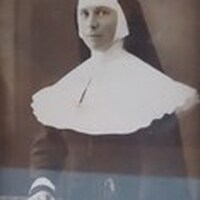 image003.jpg