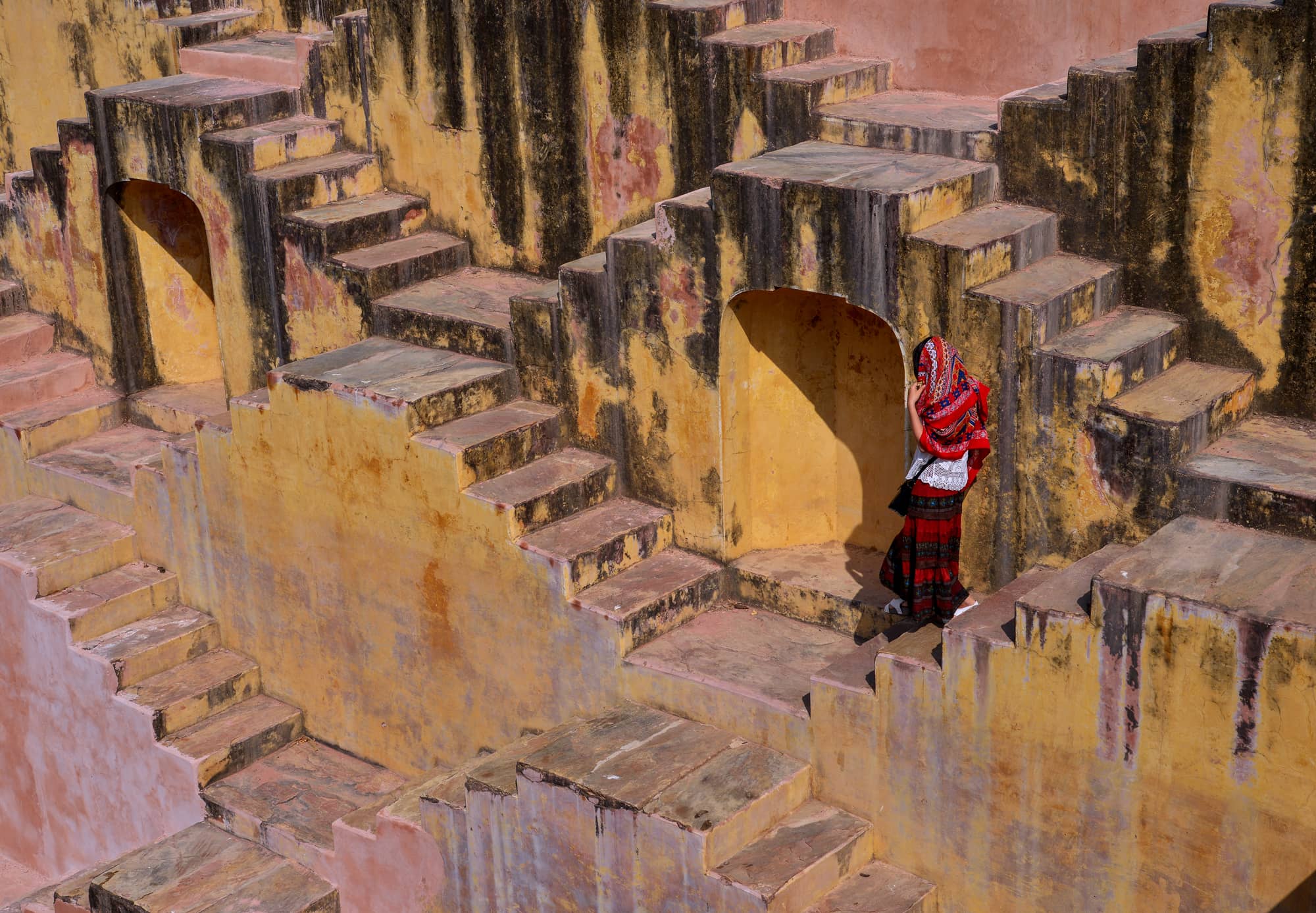
Im fernen Osten: Reisen des Grafen Béla Széchenyi in Indien, Japan, China, Tibet und Birma in den Jahren 1877-1880 (In the Far East: Count Béla Széchenyi's travels in India, Japan, China, Tibet, and Burma in the years 1877-1880)
Item
- Item Number
- 24
- Title
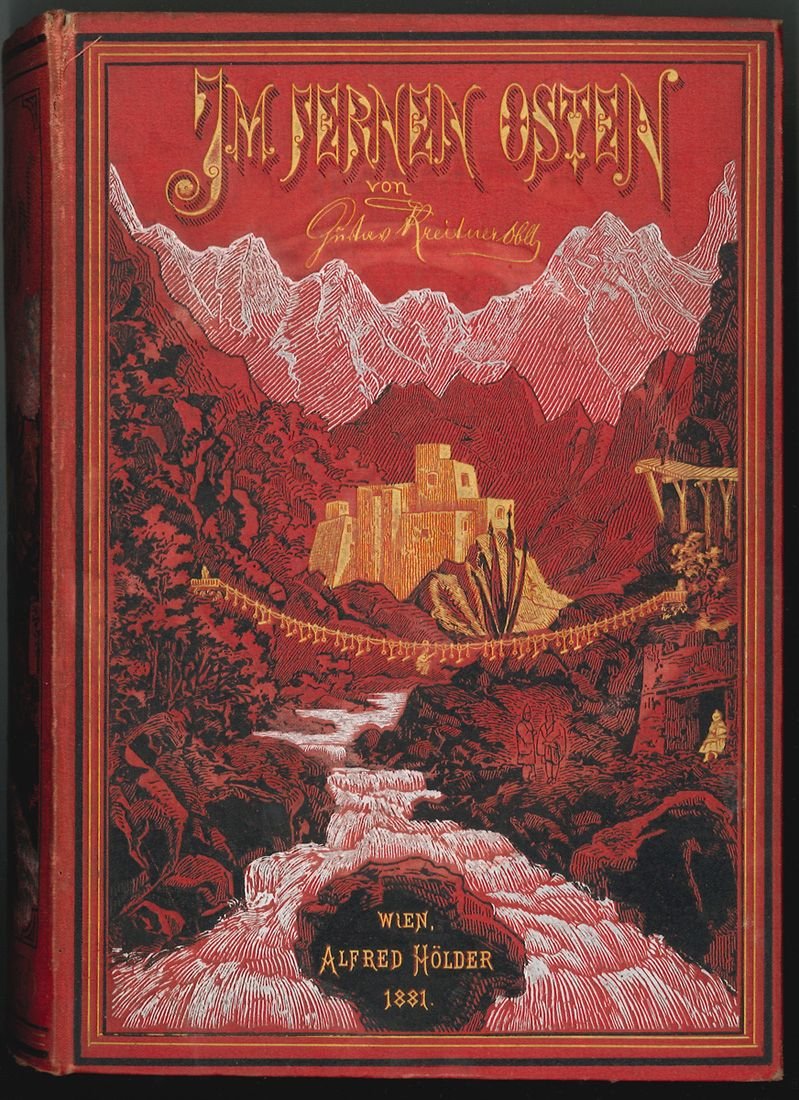
- Im fernen Osten: Reisen des Grafen Béla Széchenyi in Indien, Japan, China, Tibet und Birma in den Jahren 1877-1880 (In the Far East: Count Béla Széchenyi's travels in India, Japan, China, Tibet, and Burma in the years 1877-1880)
- Author
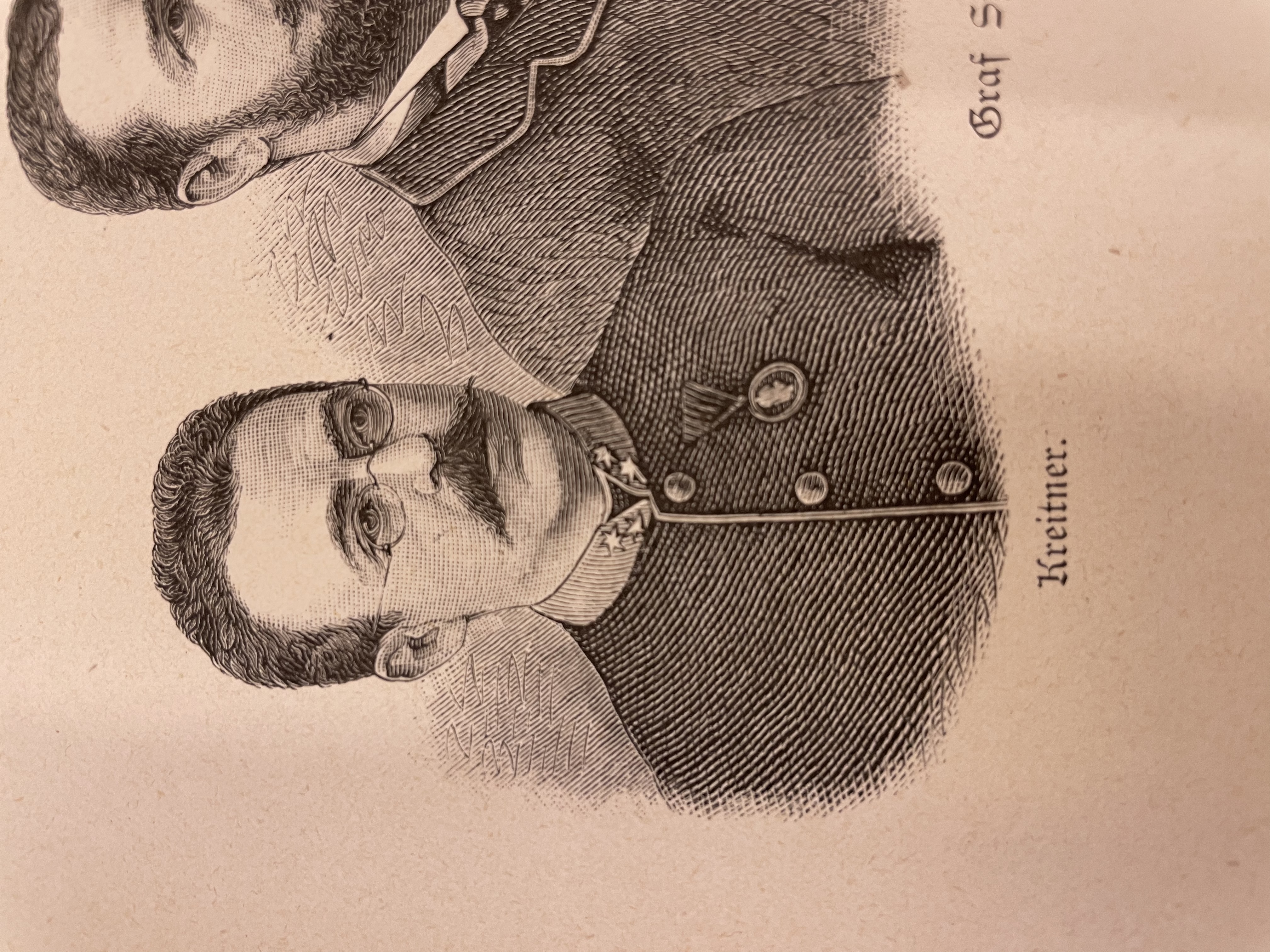
- Gustav Kreitner
- Date
- 1877-1880
- Source language
- German
- Time period
- 1860-1880
- Themes
- Art and architecture
- Astronomy
- Brahmins
- Cities
- Dance
- Hinduism and Hindus
- Islam and Muslims
- Music
- Women
- Parsi
- Religion
- Description
- Description of an Austrio-Hungarian scientific mission under the leadership of Graf Béla Széchenyi in the 1870s, by steamship from Trieste to Bombay (and later onwards towards China and Japan) described and written by Gustav Kreitner based on his own observations, including his own illustrations/woodcuts. His description is focused on local life, particularly monuments and perceived ‘religions’.
- Translated text
-
Chapter II. From Bombay to Calcutta.
[description of Bombay]
At 7 ½ we tread on Indian soil. The gas flames burning bright enough to see the Lordly monumental Buildings, the ‘Schifferpalais’, the Postbuilding, the University, the new Church etc., in the light. Leaving the monotony of life at sea behind (…) the first deep and secret Impressions appeared, we now basically fared through a city with a completely European Outlook, and when these surroundings came forward even stronger in the following days, only the Palm trees, the Heat and the Brown Figures reminded us, for those who visit the European city, that the Motherland is really far away.
[provides descriptions of the ‘European’ part of the city, and its tramway]
As quiet as the European City was during evening hours, the livelier the image offered by the goings-on in the Hindu Town. As with us during a yearly fair, the Crowd swelled to and fro. Laughing women’s faces looked outwards from the upper windows of the single-storied Wooden houses, curious to follow the bustle in the streets. In brightly coloured, airy robes, their nostrils and earlobes richly loaded with Gold- and Silver rings, they delighted themselves with the refreshing evening air after the day’s heat. In the ground floor tracts extend a workshop and sales’ vaults adjacent to each other. Here by day- or gaslight there was hammering, filing, turning, sewing (here and there with the machine) until midnight, when finally Fatigue makes the Eyes uncertain. Then the shop, which possesses a small Entrance unto the display area, was closed with one or two shutters, and the Owner sleeps on the wide pavement in front of the closed Door.
Here and there between the Houses stand needle-like Pagodas, with a round Tower emanating into a Spire, where the Altars are all assembled with mysterious images of gods and other horribly dazzling Sculptures. To tread the Inner part of the Temple is prohibited to Europeans. Beggars with twisted limbs were sitting at the doors of the Sanctuaries and pleaded for a small Gift.
Pg. 35
The next morning our Luggage received a customs inspection. The instruments passed duty-free, as the same would first be used in China. Count Czéchenyi took only four pieces [rifles] for use of the Hunt in India with him.
[mentions hotels the expedition members are staying at, gardens, and museums]
Stepping out of the Museum, we had the Occasion to pass before us the sounds of Promenade music of Bombay’s elegant world. Every Thursday Equipage after Equipage comes here; the Ladies’ world in rich Toilette, on this occasion they do not leave the Wagon and the Gentlemen visit the same in the Wagon. The military music just played the Waltz ‘Künstlerleben’. These motherland sounds found in me the liveliest Repetition and transported me into the hottest Mood.
Pg. 36
Everything I saw and heard was new to me: the Food (English dishes with Indian Spices), the strictest etiquette of the Table company, the brown-skinned Servants, eventually the Sleeping under a Mosquito Net, while the small lizards [were there], similar to the Flies of our Homeland, twirling around on the walls of the room, all of this had the Magic of Originality, of a faraway, strange country.
[mentions flora, natura and vegetation, banana trees]
Pg. 38 [the expedition has a chance of witnessing Parsi funerary customs at Bombay, the description points at a so-called ‘Tower of Silence’]
In a small Temple burned the eternal Fire. The five massive, stone-built and wide whitewashed Towers of 13 meters in diameter by 8 meters stand tall, in the Middle a small door into the Tower, through which the Bodies were brought on the platform. This is for receiving the dead, hollowed out in a radius and divided into three parts by two concentric circles, the outer destined for the Men, middle for the Women and last for Children’s corpses. This platform leads a bit to the middle point and from there a big canal leads to the Earth, as from all Holes Blood flows into the stone channels there. At the funeral the Corpse man was shrouded in white robes, carrying an open stretcher. The Corpse bearers follow two by two, likewise in white clothing.
After a short prayer by the holy Fire the Corpse man is brought on the Tower. On the Garden trees already hundreds of vultures were waiting for the corpses, of which in a few hours no more than a skeleton remains. The next days the bones were placed in a central tower. This Art of Burial has its Origin in the religious View that in Death every man is equal, and Poor and Rich are formed from the same Matter.
The next Sunday morning the Servant reported at breakfast that a Performance of an Indian magician group had begun in front of the Veranda. Despite the Sunday some Englishmen found themselves as Spectators, who I joined. As soon the Hindu produced the trick, to let a Plant grow. He put a thorn in the Earth closest to our feet, sprinkled the Earth with Water and covered this Plant with a cloth. After a few minutes
Pg. 39
He lifted the cloth and one could see a small Plant, a hand’s width high. He poured water on the Sprout again and repeated this Manoeuvre several times. The plant turned into a little tree with juicy green, wide Leaves about a Meter high.
The cobra tricks are well-known. I will only say, that all Snakes remain in possession of their poison fangs. The Influence which the monotonous Piping on a wrongly tuned Clarinet has on the snakes in their Taming appears clear as Day at every production. As soon as the Piper begins to play on the Instrument, the snake lifts itself, as if electrified, its narrow Head blows up its Neck, so that the remarkable drawing of a Spectacle clearly comes forth, the enchanted Snake lunges, and lightning-fast throws its head to all sides.
At the closing of the Performance in our Hotel some Gymnastics came with Bamboo sticks, with which they had to balance themselves. The Salto Mortale finally aroused real astonishment, in a pointed Peak, sharp knives and Spears,
Pg. 40
which only left a very small Space, into which the Artist aimed his Jump with infallible certainty.
At the Time of our Stay the Mohammedan residents of Bombay made preparations for the next night’s occurrence of Muharram time. Big groups marched through the city crying and singing, while others sat sadly in front of the houses and prayed. The first call themselves the Sheeah (say Schih) Sect and are the Majority in Bombay, the sad ones, who call themselves Soonee (Say Sunih) Sect, live mostly in Turkey and Arabia; the Feast commemorates its origin of the murder of the two sons of Ali, Hassan and Hussein. While the Majority still displays its joy in the murder, the other Part is still deeply troubled in this Blood hatred. These Feasts often take on a questionable Character and Disasters between both Sects are not rare.
On the evening preceding this Feast, the Cheeahs erected Miniature Temples on a Plate in front of their Houses. These Temples were fashioned out of shining Plate, and richly decorated with Silver and Mirrored glass. Many of these humble edifices were up to three meters high. Uncountable oil lamps illuminated the many Processions, which moved from Altar to Altar under the enchanting lament of their singing with tamtam-accompaniment; swords were swung into the air, Bengal fire was burnt, with a Word, the Feast had a wildly fantastic Character. In counterpoint hereto the Soonees also strongly gathered before their houses in the Evening hours, sitting in a circle of Wooden benches and in the Middle throned a Priest or an old family headman, who read Prayers, which seemed to put the spectators in a sad mood. Already during the night of 15th ot 16th January, it was impossible to sleep calmly. Until the early morning the singing and jubilating Crowd of people wandered through all the streets.
By noontime we set out together to attend the Festivities. Even at great distance, due to the Crowd on the Streets, through which the Coach would take its Way, the number was so great that we could hardly pass through it with some effort. Not a soul could avoid the Wagon. Pressed man unto man, the rarest scenes were played out there.
A miraculous Play of Colour depicted the total image of a Spectacle of the Orient, which the European in his usual setting would refer away to the Realm of Magic. He stands – he hears just like the crowd surrounding him and yet feels different in the Middle of this Forest, which is mentally so far beneath him, although at this Moment he is moved to Admiration.
Pg. 44 [Kreitner emphasizes the music of groups of drummers]
By the evening it grew quieter, the many thousands of Strangers left Bombay, Muharram time had passed.
For the next day, Count Czéchenyi had the project of visiting the isle of Elephanta and had rented a steamboat to get there by water.
[describes the boat]
Police soldiers from Bombay inspect Visitors, to protect the Temple from civilian or barbaric lust for annexation. One reaches the Main Temple, which is cross-shaped. What an endless amount of labour it required to build this Temple space.
[mentions architecture]
Pg. 45
The three-headed statue of the God Mahadeva, to whom the temple is consecrated, has a height of four meters. Nearby stands the stone statue of Durga, the wife of Shiva. The Trinity God of the Brahmins is called Brahma the Creator, Vishnu the Preserver, and Shiva the Disruptor. In the middle of the temple stands a cupola-shaped monument, in which the “Linga” is found, the symbol of the creating force of nature. The Linga itself is a rounded stone cylinder.
Pg. 46
Which is wider in the middle. [describes how the visitors move through the complex]
In the side-caves we found some more isolated, some more grouped-together images of divinities among which also bulls and elephants figured.
The Elephanta caves shall not be more than 900 years old. The Portuguese visited them first in the 18th century and took the stone by which the cave had been plastered shut by the Maharattas, back to Lisbon. Since then, the stone is supposed to be in Sintra (Portugal).
[describe the stones of the temple complex]
As well as the whole of the buildings’ architecture, the god images confirm this to be an earlier existing Brahminic art.
[Kreitner describes that Count Czéchenyi goes (tiger-)hunting and describes the roads. Part of the expedition would go to Calcutta while the others (including himself) would go to Ahmadabad]
Pg. 53
[describes the town of Rajjit]
Immediately next to the water’s edge were little houses built on the natural riverbanks, which Inside, as in all other Caves hewn in the rock, contained the symbol of the power of the God Shiva, the Linga. These little temples were mainly visited by the women, who offered Flowers there and poured over the Stone image with water. In the grey-blue clear water the Hindus bathed each day in the Morning and Evening under the Supervision of Priests. The flat riverbanks are the favourite haunt of the whole Hindu population, the Playground of Children. We left Rajjit the next day [towards Allahabad].
Pg. 54
An English Missionary pointed out to us that the Holy City of Benares offered more sights than others in our program. On the 22nd of January we reached Mogul-Serai [Mughalsarai] at 10 in the morning, from where a railroad leads to Benares. An hour later the carriage stopped straight across the Ganges, under the great wide hall of the Benares Railway station. We rented a Car, which would drive us into the City (…) towards the north to a European settlement and a hotel.
Pg. 55
Benares, the holy city of the Hindus, is very old. Darkness still floats around its past, although the suspicion has taken place that Benares was built by the Aryans. Here, the cult of Brahma, Buddha and Allah alternate with each other, although one is only reminded of the erstwhile Golden epoch of Buddhism by some badly maintained Ruins, while the Brahminism glowingly maintained itself against Onstorming Islam. The city seems to have been washed out of the water. Colossal Stone steps, partially hewn out of the sandstone banks, partially constructed, lead from the Ganges banks unto the portals of Palaces. These steps are the playground for the Hindu’s going about. Here they bathe, perform their Devotions, they conduct their most intimate Private Undertakings, they burn their dead, here is finally the gathering place of the greatest group of beggars.
Wonderful boats directly nestle at the Stone steps. Wondrous, imposing, fairytale-like Palaces reach in diverse architectural fashions forged together. Grey and withered are the walls
[description of stone]
Between the Palaces arise the Temples of Brahma and Shiva, equally built from sandstone and basalt. All Temples end in Towers, topped by arches and spires. Right and left of the brightly coloured Doors are flags flattered with Silk bordered with Gold edges.
Pg. 56
The total impression of the City, as seen from the Ganges, is overwhelming, and has to be even greater when Festival fires are mirrored in the flow of the holy Stream Ganga and the fleet of Ganges ships, itself considerable under normal circumstances, grows to a very considerable mass, covering the Stream. Then shine the manifold broken lines of Monumental buildings in Steps of different height surrounding the Flood City of Splendour in Days gone by, when Benares was the Seat of Brahminical Wisdom and Sanskrit study.
Pg. 59
Our Guide, an English-speaking Hindu, first brought us to the Observatory of Indian Astronomers, which we reached after roaming the narrow (1–2 meters wide) although excellently plastered streets.
The Observatory was constructed in the year 1693 by the Indian Ruler of Jajanagar, Djchech Sing, on assignment by the emperor Mahomed Shah, to correct the calendar. The rajah, a thorough Mathematician, completed the assignment to full satisfaction of the Ruler, and his astronomical tables, which are named Ji Mahimmedschech, are still in Use today.
[describes the Observatory’s architecture]
We ascended on a winding staircase unto the stone banks of the Ganges. Through a small window of the Stepstower we glanced on the platform of an opposing house at a Group of brightly clothed Girls, singing and sitting in a Circle.
Pg. 60
In the middle of the Circle a Girl danced to the singing, who herself moved like the Dance in very monotonous Rhythms, and whereby, with a translucent, black woven cloth studded with large Golden stars, the Girl made Gestures with the hands which are incomprehensible to the Uninitiated. Having arrived below, we gazed upon the opposite banks at a Fortress which was the erstwhile residence of the enthroned Rulers of Benares, who spends the rest of his days here under Palm- and Banana Trees, with his wives inaccessible and closed-off from the World.
Things were lively at the Ganges riverbanks. The Hindus bathed numerously in Stone basins, under priestly supervision. Countless Lingams were dressed in garlands of flowers and poured over with water.
[describes palace architecture]
Pg. 61
The High significance of Benares as Cultural centre of Hindustan speaks through the more than 1000 Temples, although these are of lesser architectural Beauty compared to Temples in other Parts of India; this applies to the outside, as the inside is really excellently decorated with sensible ornamental Jewellery and rich Sculptures. In these temples, more than 20 000 Priests assure the service of the Gods. We visited the Temple of the Nepalese. This one, with the manifold monsters before the Entrance, is built of wood. Its outside is covered with excellently executed Carvings, through which lascivious scenes are depicted. In this Temple the great stone figure of the God Krishna is found; further on a second similar Stone figure of the God Bhim-Sing.
The Holy City for the Burning of Corpses is a freeplace under the Nepali temple at the Ganges stream (which in Hindustan is called Gunga). The fire belonging to the deceased is a funeral pyre erected meters high where the bonfire licks uninterrupted, on which the corpses lie covered in shrouds. Thick smoke rises upwards. Soon the upper layer of wood will be consumed, and the naked Corpse is half-burned on the glowing Coals. Then the close Relatives come, who are until then sitting on Stones, to strike with long bamboo sticks to the pyre and beat the corpse. Dark, foul-smelling Smoke spoils the air. It then became night and so the showering Sparks give the Procedure an even more scary Aspect.
When the fire has burnt out, so one gives Water to the pyre, and the next morning those left behind search for singular, blackened bones, which are put in an urn or raised out. The many Wood- and Stone markers at the Burning place are
Pg. 62
Memorial signs to Wives, which in earlier Times, when the deceased Men were burned, threw themselves into the Flames and died voluntarily. The Influence of the English stopped this Practice, still it arrives from time to time, that the Hindu women seek Death. When the Ganges rises after the rain season in Summer, such candidates sit on the lowest Stone steps and wait as long as they are finally taken by the Waves into the Deep. Here, under surveillance of a Priest, some people wash who wish to clean themselves of all Sins.
On the return a little dancing light illuminated the Waves of the Ganges. Our guide pointed to an Oil lamp swimming on the Water and explained its meaning. Women, whose most fervent wish Shiva, despite fervent plea, left unfulfilled, fast during fourteen days before the next New Moon. On the Time of the New Moon they surrender the Lamp to the holy Ganga and live the next fourteen days in roar and rush, and with Certainty look towards the fulfilment of their Wishes.
As means of transport, the Hindus use horsedrawn carts, and to these Bells and Cymbals are attached, which give the whole ride an enchanting noise. This Noise served to scare off Cobras, of which there are Many in and around Benares. In those Lands where Postal traffic is accomplished by runners, they wear the package of Letters on their backs and swing a large Bell with their hands, also as Protection against the feared snakes. Lately it happened that in Mysore a strike erupted among postmen. The Cause of this was a Tiger, which, lured by the tone of Bells, was called to choose the postmen running past as his Meal. The feared Robber was discovered and shot, yet since then the Mail traffic in Mysore is delivered without bell ringing.
Pg. 63
On the morning of 23 January we visited the Monkey Temple in Benares. The closer we came to the sanctuary, the livelier the streets became. Wherever our glances wandered, we saw Apes, which fled from the Trees or on the Rooftiles in their great funny scattering. On a Balcony before the Temple a Hindu Music brought the Morning greeting to the apes, at the Entrance Fruit sellers were standing and led the Visitors in, to give snacks to the animals. We treated the 300 monkeys, which lived in the Temple, with some Almonds and Beans, which we threw under them. An indescribable scrimmage was the consequence, and for a moment even the Monkey King forgot his Value. He brought himself into a lively duel to win the greatest pieces for himself. The Monkey King was a large Chimpansee
[describes monkeys]
In the middle of the Temple a chapel is found with the Image of the Goddess Durga. The God’s Face looks like the rising Sun and its Clothe shining White. It is the Protector of Apes and the funny animals of the Indian forest are dedicated to him.
Through the narrow Lanes of the Bazaar we reached to the great golden temple of the God Shiva. First we mounted on a Tribune across from the Temple, from where we could see its two gilded doors. Though one or two great Drums and an assembled Orchestra chased us away towards the beautiful Place, and, led by an English-Indian Constable, we entered the Inner of the Temple. Hundreds and hundreds of attentive Hindus were present and forced their way to the upper part. Between them, here and there, a younger or elder Bull appeared. Animals which, so to say, represent the Might of Shiva and are the favourite animals of this Divinity. They look well fed and fat, just like the Priests, and enjoy the prospect
Pg. 64
that they would die of old age. A Bull statue in black marble was a point of attraction for the attentive. The Bull was overloaded with Flowers and poured over with water, which came from a neighbouring Source.
The naked Hindus wash themselves with spring water, after which a corpulent Priest painted their foreheads with white stripes. This often also shows itself as such a line along the Edges, like a plaster to the Openings. While singing and praying, the Attentive sat on basalt Stone rings around the Sources; here we noticed a life size Bull statue in basalt, on which rode the God Shiva, next to another group of Stones: Shiva embraces his Consort.
The main place of assembly was a Source in a small basalt chapel. On the water swam Rose petals and other fresh Flowers.
[description about water]
Pg. 65
In the middle a Cylinder of a Linga reached above the clear water. Everyone wanted to touch the stone, all wanted to pour it with water and decorate it with flowers. Newly arriving visitors brought the sacrifice away, here the naked, fat priest, joyfully greeted the misery of an unfortunate before a young Bull – it was an Image of bygone times, bygone Worlds.
Over all Temples and Beautiful buildings stretched, slender as two pines reaching for the heavens, the two Minarets of the Aurangzeb Mosque, the most beautiful and richest among 300 Mosques, a Jewel of Benares. We ascended one of the towers.
[describes the architecture]
In the Bazar images of the Gods were created with the most exaggerated fantasy, plates, vases, shined in Copper, were offered for sale at little Money.
The same day we left Benares, set out to Moghul Serai, and from there with the coach to Calcutta, where we arrived on the 24th of January 1878, we went to the Great Eastern Hotel, in which we had to take our military quarters [metaphor] for the time being. In the first night 50 of our rupees were stolen, either by a roommate or a hotel servant, we could not clear that out. We only obtained separate rooms from the second day onwards.
- Annotations
-
- In some aspects the Széchenyi expedition was pioneering, although this has mostly been noticed and described for the Chinese and Japanese context. For instance, the expedition is among the first Europeans to discover the Dunhuang Caves, before Aurel Stein in 1907. While recognized and acknowledged as a source in Japanological studies, the Indian part of Kreitner’s description has remained un- or understudied.
- Kreitner’s depiction of India seems to show, in some aspects, a rather positive valuation, where he mostly presents India as one spectacle after another, ensuing from his wonderment.
- Spelling and interpunction are according to the (printed) source text version, where the capitalization of certain words point to their significance for the author.
- Complete title
- Im fernen Osten: Reisen des Grafen Béla Széchenyi in Indien, Japan, China, Tibet und Birma in den Jahren 1877-1880.
- Author details
- Gustav Ritter von Kreitner (1847-1893)
- Date of publication
- 1881
- Dates of travelling
- 1877-1880
- Publisher
- Alfred Hölder
- Place of publication
- Wien
- Archival source or library
- National Library of the Czech Republic (Klementinum), F 023946.
- Locations in India
- Mumbai, Elephanta Island, Rajjit, Varanasi
- Keywords
- Religion, India, Bombay, Benares, Calcutta, Islam, idols, clothing, spectacle, ceremonies, Temples, Parsi, Muharram, Brahmins, Europeans in India, music
- Related literature
-
Russell-Smith, Lilla. “Hungarian Explorers in Dunhuang.” Journal of the Royal Asiatic Society, vol. 10, no. 3, 2000, pp. 341–62.
Brückner, Julia, “Gustav Kreitner’s Asian Travel Account – The Aino People in Japan.” MaRBLe, vol. 6, 2014, pp. 175–194.
Mészáros, Csaba, et al. “Ethnographic Accounts of Visitors from the Austro-Hungarian Monarchy to the Asian Peripheries of Russia and Their Contribution to the Development of Systematic Ethnological Studies in the Monarchy: Preliminary Results and Research Perspectives.” Acta Ethnographica Hungarica, vol. 62, no. 2, 2017, pp. 465–98.
- Translator and copyright
- Wim De Winter, September 2025.