
‘Schijn en werkelijkheid in Delhi’ (‘Appearances and reality in Delhi’)
Item
- Item Number
- 26
- Title
- ‘Schijn en werkelijkheid in Delhi’ (‘Appearances and reality in Delhi’)
- Author
- Aster Berkhof
- Date
- 15.01.1956
- Country / region
- The Belgian Congo
- Source language
- Dutch
- Time period
- 1940-1960
- Description
- A newspaper article from the 1950s written by the Belgian author Aster Berkhof who would become well-known in the subsequent decades. The article describes his arrival in Delhi and the typical image of India he has and reports his own experiences and judgements. This is part of a series of articles published in a colonial newspaper, which exemplify some of the typical problems of European reporting about India.
- Translated text
-
When the tiny miniature airplane of Indian Airlines – a DC-6, reduced to one-fifth its original size, four buzzing engines, but only ten passenger seats – descends from the azure blue sky to the thin purple layer of heat above the yellow sand plain on which Delhi lies steaming in white-gray, one involuntarily holds one's breath. This is India! The fabulous India of the maharajas, the precious gems, the silk veils, and the cobras.
One sees before one's eyes grand, dark temples and pagodas laden with intricate sculptures; fantastical white palaces inlaid with dazzling pearls and precious stones; marble domes and minarets standing dreamily in the moonlight at night; bustling squares with endless crowds of people, where processions move in a blaze of color: elephants draped in damask and brocade, rigid, multi-armed idols towering above the sea of heads, royal rulers in white satin beneath golden canopies, sparkling with rubies and sapphires; thundering above the distant clamor of the masses, the solemn tones of temple trumpets and shimmering gongs; sacred hymns coming from afar like gusts of wind, unchanged for more than three thousand years; motionless yogis the shrill flute music of snake charmers; fortune tellers and magicians addressing the drumming crowds; drowsy shady corners at the foot of a high wall, where gurus with wild hair and burning eyes speak to crouching boys about the beginning of the world and the path to the gods; beyond, an immeasurable tropical-green wilderness, ravaged by tigers, snakes, and malaria, with humble hut villages lost within it; in between, on the endless sandy roads, holy wanderers: bony, emaciated figures with yellow robes, staffs, and begging bowls, accompanied by a boy devoted to their service; grand and magnificent through that wilderness, the holy Ganges and on its banks, millions of pilgrims swarming to wash themselves in the holy water.
India, ancient, mysterious land, whose priceless riches have enchanted mankind since the dawn of time. Rare travelers who visited it returned with fantastic tales of a green paradise surrounded by blue seas, where wisdom and beauty had flourished since time immemorial, where people were dressed in white robes, worshipped many gods, revered the cow as a sacred animal, banished violence from their lives, and believed that after death, the human soul returns to live again in another earthly being.
This country rises up from below and a question overcomes us: how does this beautiful Empire of the East fare in a world where it is impossible to remain closed in on itself? Over all the horizon mountains, heads look down on the paradise of beauty and wisdom, planes land there, cars and trains rush back and forth and sow confusion. What has this abrupt contact between the new, mechanically organized West and the ancient, rural, peaceful East brought about in India?It's not right
After a week of toiling through the vast labyrinth of India's bureaucracy, completing the traditional tour of the ministries, with my interviews on paper and the classic stacks of statistics in my suitcases, I was confused. Before leaving Belgium, I had studied several reports on India, some containing nothing but literature, others nothing but figures, but all agreeing that the social and religious institutions in India differed so fundamentally from those in the West that they made the modernization of the country impossible, or at least severely hindered it. Well, after talking to India's rulers for a week, the final conclusion was that none of this was true and that India was already almost a modern country.
Something had to be wrong somewhere. Instead of leaving Delhi, as I had planned, I wandered around the city on my own for a few days to find out (…)
It is impossible to convey in a few words the impression that these Indian masses make at first glance. One does not know whether it is revulsion at the indescribable filth that spreads its stench everywhere, or aversion to the unclean, skeletal bodies that press against you on all sides; perhaps pity for the hungry boys and little girls, dressed in rags, crying and pulling at your arms, showing deformed stumps of arms or hideously deformed legs; perhaps fear of the strange, dark Asian eyes that stare at you everywhere and that you cannot measure.
Roaming through India's slums
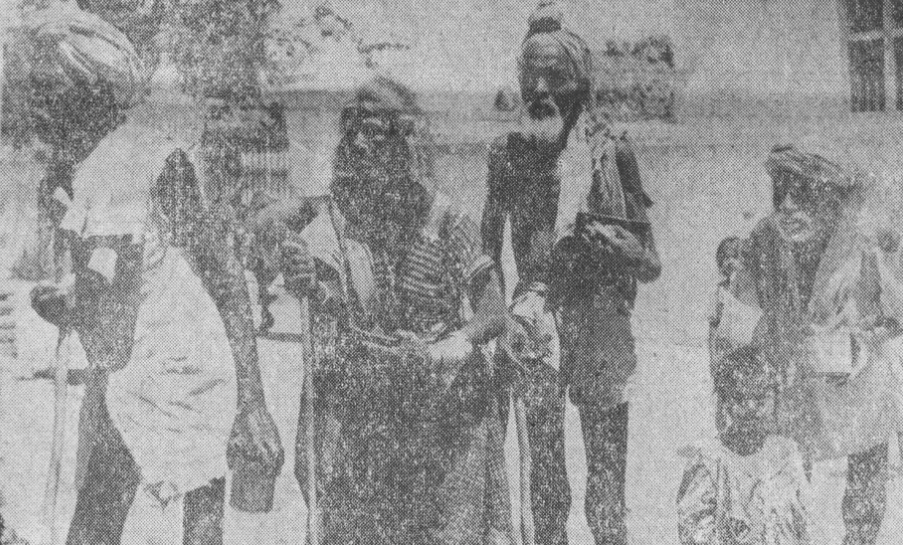
The alleys of Delhi's slums are apparently rarely cleaned. Banana and mango peels are rotting everywhere, and you often have to jump to get through. Swarms of flies buzz around. The pungent smell of urine and feces rises from every corner. If you look inside the dark houses, you notice little difference between the sand floor and the street outside. Children play in the dirt, old people lie there sleeping. Filthy water and food scraps are thrown onto the street from dark cavities in the low walls. Vultures and skinny dogs with hollow eyes rush to eat them.
The clothes of many people hang in rags around their bodies. The women's saris are gray and frayed, the men's loincloths are colorless shreds. The arms and legs protruding from them are skinny, and you can count the ribs on their bare upper bodies. The men's shoulders are narrow, and many have sunken chests and eyes glowing from tuberculosis.
You wander in and out of alleys, your chest tight, your throat constricted by nausea. You place your sandals against a wall and walk into a temple. In a dark room, you see grotesque idols standing in niches, monsters with the heads of elephants, rigid figures on tigers, terrifying creatures with numerous arms like snakes staring at you. In front of them, ragged men with long, wild hair stand praying, their hands folded, motionless, their eyes glowing with ecstasy. Women throw handfuls of jasmine petals at the statues while uttering fearful, tender cries, while grim Brahmins with bald skulls and ropes around their naked torsos collect alms. In the corner, a strange orchestra plays shrill music on ancient instruments, endless melodies with barely shifting tones that torment the Western ear, accustomed to harmony.
A pyre has been erected in a small square near the Yamuna River. On it lies a corpse, completely wrapped in white bandages. Relatives of the deceased stand around it, a temple servant says prayers, then one of the relatives sets fire to the pyre. Small and meager, they stand around the fire, where, in the agonizing stench of burning flesh, their beloved one is turned to dust once more. Soon, the charred remains will be gathered from the embers and carried to the river amid the singing of hymns, to be scattered on the water.
Numb, with throbbing temples, you wander back into the alleys, where now, as night falls, the swarming masses press ever closer together. You no longer hear the plaintive voices of hungry children swarming around you, you hardly notice the sinister individual who emerges from the crowd with a cobra, an old hideous beast, heavy, thick as a calf, hanging around his neck, whose sticky head he puts in his mouth in the hope of being photographed for money. You no longer hear the poignant melodies and piercing trumpet tones coming from the temples; you stand amid the dull clamor of an endless, miserable, decaying, diseased, emaciated mass of millions. From far away, that clamor rolls in waves; it is a sea that surrounds you with tremendous roar, overwhelms you, crushes you.
You flee, fearful, sick with revulsion, and ask yourself in despair: where is the beautiful, fairy-tale India of the travelers' stories, and where, oh where, is the new, bright, healthy India that the rulers spoke of with such fire in their eyes?
Two Indias
On the last evening of my stay in Delhi, I had dinner with an "information officer" from the Indian Press Agency at the Indian restaurant Moti Mahal in Faiz Bazar. This restaurant is popular because it is one of the few indigenous establishments that is air-conditioned. The officer, a very charming man who was raised in London, had previously guided me through the very complicated administration of New Delhi, provided me with useful introductions, and shown me Delhi in his own car.
But that was the point: he had shown me his Delhi. There are two Delhis: Old Delhi and New Delhi. Not only are they separated by a few kilometers of open land, they are also separated by the gap between appearance and reality, and that same gap also lies between the two Indias I had begun to learn about: the India in the government papers and the real India.
(…)
No more maharajas
New Delhi now seems to me to be symbolic of the way in which journalists, and through them the world, often portray India.
The man with whom I dined at the Moti Mahal restaurant swept all my impressions of Old Delhi off the table with a carefree gesture and said with sparkling eyes:
“Isn't India a wonderful country to live in? Everyone is working to make India beautiful. If you have nothing, work hard and see that your labor bears fruit!”
That had been the main theme in all the interviews I had conducted. Entire parts of India had been dry for centuries, I was told, and now we were working to irrigate them. Other parts were constantly threatened by floods; they were now working to dam those waters. There was not enough food for the Indians, but Jawaharlal Nehru regularly addressed the people and asked them – and succeeded! – to grow more rice, more grains, and more fruits. The population was weak and defenseless against disease, but now a medical service had been established, along with a hygiene service, an urbanization service, a service for this and a service for that... In New Delhi, they are bombarded with figures, diagrams, and statistics, they unfold entire five-, six-, and seven-year plans, calculate the astronomical sums that all these plans will cost, and explain with mathematical precision where that money will come from, how much by that date and how much by that date.
(…)
“The diseases will soon be eradicated,” said the man sitting opposite me at the table, “all Indians will be vaccinated against cholera and typhus; ignorance will be a thing of the past, we are training a thousand teachers at once: we will soon do away with the sacred cows and there are no more maharajas.”
We will, we will... People are working very hard in India, and I will be able to report on that in the coming weeks, but, and this will also be striking, much of what is currently being done in India is still in the realm of the future.
When asked when they think this or that will be ready, the answer is almost always: oh, in the very near future. However, that word “near” will prove to have a very broad meaning, because my stay in the suburbs of Old Delhi, which I would later supplement with a trip to the interior of India itself, taught me that the diseases and ignorance will not be eradicated so quickly. I had attended a session of parliament and heard a progressive man proclaim that the sacred cows, this “national scourge,” as he called it, should be de-sanctified and slaughtered: as one man, the assembly sprang to its feet and three speakers defended the cows with red swelling heads and milling arms. The result: the proposal was rejected, and India's 60 million, some say 160 million, sacred cows, ghostly skeletons that produce no milk, will continue to devour the food that the people lack.
Teachers are being trained, but many, after completing their studies in the city, are no longer willing to return to their jungle villages; in those villages, ignorance is far from over. Finally, the money for the grand five-year plans does not arrive on the mathematically calculated dates, as will become apparent. New Delhi is there, as is New India, and we will have much good to say about both, but we must not delude ourselves. Old Delhi and Old India will not surrender as quickly as the ardent rulers of New Delhi believe. You cannot change in ten years what has remained the same for four thousand years. As we shall see, there are still maharajas in India, and many of them deserve a good thrashing
- Annotations
-
- This is a translation of an article titled “Schijn en werkelijkheid in Delhi” (Appearances and reality in Delhi), which was published in the Belgian Catholic newspaper De Week voor Belgisch Congo, on January 15, 1956.
- The article is part of a weekly installment which ran from November 1955 to June 1956, wherein the well-known Flemish writer Aster Berkhof (1920–2020; pseudonym for Lodewijk Paulina Van Den Bergh) recounted his trip around Asia, which he undertook in the summer of 1955. A significant part of this series is dedicated to India, on which 14 articles were published in 15 weeks. This is most of article 1/14.
- The series of articles was later compiled in the form of a book titled Haveloos India (Ragged India), published in Antwerp in 1960, wherein this article is titled “Schijn en werkelijkheid in Delhi” (pp. 7–16).
- All emphases are original to the text.
- Complete title
- Met Aster Berkhof de wereld rond: schijn en werkelijkheid in Delhi
- Author details
- Aster Berkhof (1920-2020)
- Date of publication
- 15.01.1956
- Dates of travelling
- 1955
- Publisher
- De Week voor Belgisch Kongo
- Place of publication
- Leopoldstad (Kinshasa)
- Archival source or library
- KBR (Royal Library of Belgium), DIGIT J.B. 1509
- Locations in India
- Delhi, Indrapashta, Khyber Pass, Calcutta, Agra
- Keywords
- Delhi, Temple, Architecture, Politics, India, Society
- Translator and copyright
- Jaro Demetter, March 2026
- Media
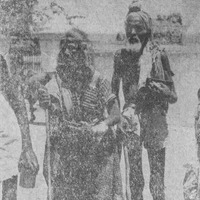 In fairytale-like Delhi, bitter poverty reigns. Swarms of starving beggars have become intertwined with the landscape.
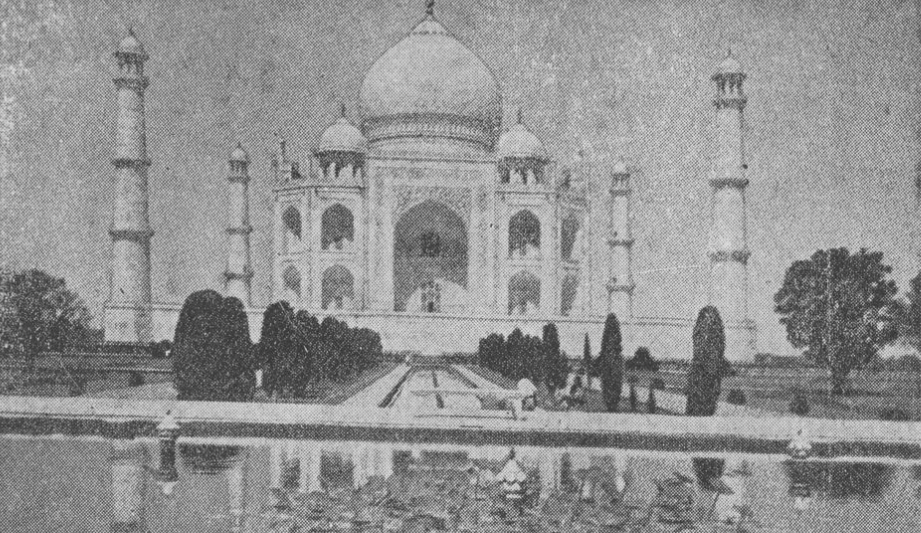
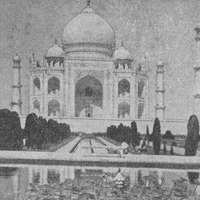 Taj Mahal, the famous royal tomb built by the Great Mughal Shah Jahan around 1640 in Agra near Delhi in memory of his wife, the beautiful Persian Mumtaz Mahal.
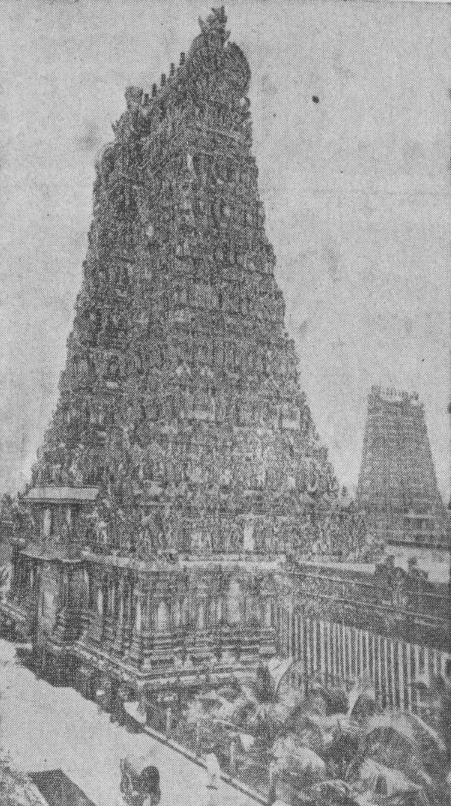
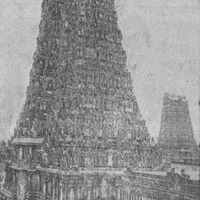 The Meenakshi Temple in South India is one of the most famous examples of the ancient Hindu temples, lavishly decorated with sculptures. To get an idea of its size, compare the temple with the cart on the road. The temple was built in 1560.