
Items
Subject is exactly
Society
-
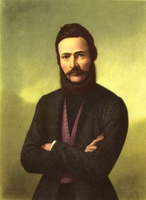 On the Affinity and Difference between the Slavs and the Indians. Excerpts from O národních písních a pověstech plemen slovanských (On National Songs and Myths of Slavic Peoples) In these excerpts from O národních písních a pověstech plemen slovanských (On National Songs and Myths of Slavic Peoples, 1853), Ľudovít Štúr (1815–1856), who was one of the most important figures of the Slovak national revival, claims that the pantheistic worldview appears strongly in both Indian and Slavic traditions. According to him, Indian tradition seeks union with the divine through suppressing thought, desire, emotion, and even life itself, whereas Slavic legends emphasise courage, action, self-denial, and helping others. He thus sees a fundamental affinity and difference between the Slavs and the Indians.
-
 The World in Small, or the Swift Traveller: The Land of the Great Moghul (De waereld in ’t klein, of de spoedige reiziger) Translation of a chapter on India, or “the Land of the Great Moghul,” from an 18th-century Dutch-language compendium of the countries of the world. Drawing extensively on an English model published in the 1740s, the author aims to give a concise account of “everything useful, necessary and worth knowing” about all countries of the world. In this section, he shares with his readers what he considers worth knowing about the Indian Subcontinent and its people.
-
 The Prologue of Long Nose the necromancer to the comedy ‘Dundo Maroje’ Long Nose’s Prologue serves as an introduction to the comedy ‘Uncle Maroje’ (Dundo Maroje) by the Dalmatian playwright Marin Držić (Marino Darsa), which was first put on stage at Dubrovnik in 1551. In the prologue India is imagined as a land of magic, that can only be reached through magic. At the same time it is depicted as an earthly paradise, a country of everlasting spring, in which no one ever suffers any hardship, and in which like in so many protosocialist utopias of its time, the words ‘mine’ and ‘yours’ are unknown. Everything is shared with everyone, and all people are equal. This perfect harmony of life is, however, thrown off balance by greedy magicians coming from outside and by the country’s women, who ask the former to bring to life the effigies they brought along. Thus carnivalesque chaos and fun, the essence of comedy, take hold of the earthly paradise.
-
 A Turkish Professor at Delhi Customs Translation of an excerpt from the Turkish-Cypriot sociologist and historian Niyazi Berkes’s “Letters from Asia,” which recounts his experiences in Delhi on the way to Aligarh Muslim University, where he was heading as a visiting professor.
-
 Delhi: The Last Capital of the Turkish Rulers Translation of a major Turkish journalist and politician’s report of his sojourn in Delhi.
-
 ‘Kunnen de Indiërs al lezen?’ (‘Can the Indians read yet?’) A translation of a Belgian newspaper article from the 1950s, which exemplifies problems in the European reporting about India from this era. Written by a well-known journalist and novelist, it is part of a series where he tells the readers about his experiences on a journey through the Subcontinent.