A fourth poem by the Serbian poet and traveler Jelena J. Dimitrijević. This poem was first published in the journal Misao 31.5-8 (1929) and again in 2025 in her poetry collection K suncu za Suncu (To the Sun, for the Sun) from the manuscript.
Translation of a second poem by Serbian writer and world traveler Jelena J. Dimitrijević, from her collection of poems written during her journey through India in 1927.

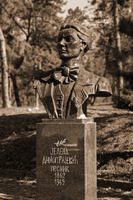 On the Ganges, as the Sun Rises A fourth poem by the Serbian poet and traveler Jelena J. Dimitrijević. This poem was first published in the journal Misao 31.5-8 (1929) and again in 2025 in her poetry collection K suncu za Suncu (To the Sun, for the Sun) from the manuscript.
 Noon in Puri Translation of a third poem by Serbian writer and world traveler Jelena J. Dimitrijević, written after a visit to the Indian city of Puri in 1927.
 India Translation of a second poem by Serbian writer and world traveler Jelena J. Dimitrijević, from her collection of poems written during her journey through India in 1927.