
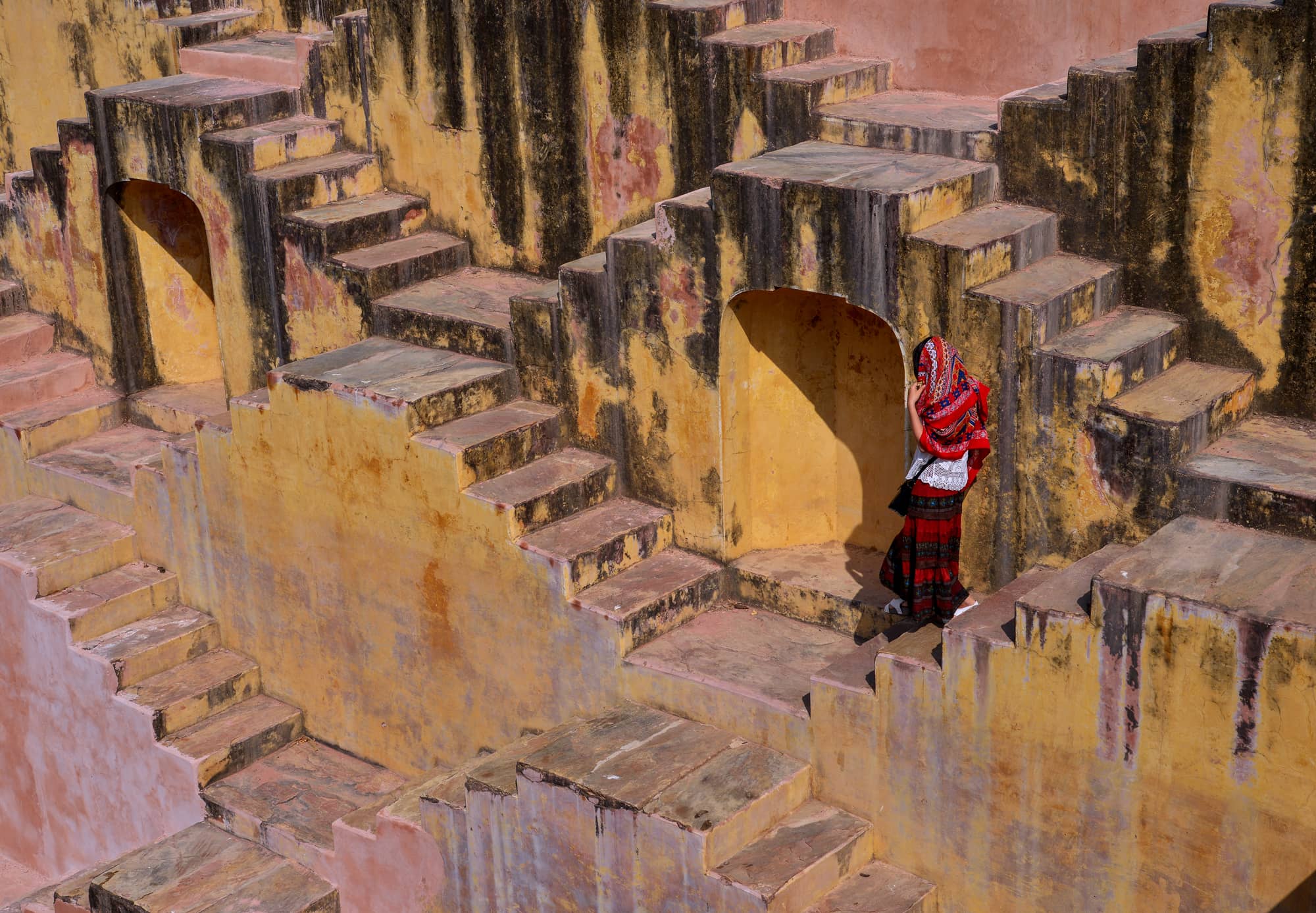
On the Ganges, as the Sun Rises
Item
- Item Number
- 42
- Title
- On the Ganges, as the Sun Rises
- Author
- Jelena J. Dimitrijević
- Date
- February 1927
- Country / region
- Serbia
- Source language
- Serbian
- Time period
- 1920-1940
- Description
- Jelena J. Dimitrijević (1862, Kruševac – 1945, Belgrade) was a Serbian writer and world traveler. Known for her profound intercultural curiosity and cosmopolitanism, she undertook a journey around the world in 1926, visiting India in 1927. This poem was published in journal Misao 31.5-8 (1929) and again in 2025 in poetry collection K suncu za Suncu (To the Sun, for the Sun) from the manuscript.
- Translated text
-
On the Ganges, as the Sun Rises
Cymbals1 resound on the bank by the sacred Ganges
And silver voices echo,
As if nymphs were singing
Or wailing –
Wounded in the heart by an arrow beneath the clouds.
A scent spreads from the sacrificial altars,
From the hill,
From the widows’ temple;
Candles flicker, altars gleam;
From the soul they rise, like gulls rising from the waters at dawn
Where they spent the night –
Or like birds from nests–
A prayer:
“Krishna Hari, Krishna Hari!”
To the clash of cymbals and the rhythm of their dance
For the souls of their departed husbands, they pray–
The Hindu widows.“Krishna Hari, Krishna Hari!”
Resounds;
Candles flicker and altars gleam.Around their necks, sandalwood-colored
And shining;
Red and yellow are their sacrificial garlands
Instead of the jewels they have ceased to wear;
Unbound is their long, jet-black hair
Beneath white saris thin as spider’s web
Revealing their heads, their bare dark arms,
And – breasts,
And barefoot
The old and the young, even girls, children3
Lifting mystical eyes to the golden temple sky
To the rhythm of the dance and the clash of cymbals
They pray:
“Krishna Hari, Krishna Hari!...”Tiny bells are heard: they chime, chime, chime
From the Widows’ Temple,
While they sing, or wail from time to time,
Innocent condemned women –
Hindu widows.Candles flicker and gleam from the altar;
Echoing loud:
“Krishna Hari, Krishna Hari!”Night from day divorces…
Upon the broad white waters of the Ganges
Dark boats lie;
And like a dream,
Like illusions and strange mystical mirage:
Of human heads peering from the water
They seem: now flocks of dark gulls, now phantoms of the night…Hindus!
Yet not as living creatures, but spirits holy and profound
Or like the shadows of the dead: from their ashes at the bottom of the holy Ganges’ ground
They arose
Appearing in the light of the Lord’s day.Hindus!
Like the spirits of their dead ancestors:
Washing away sins in the sacred waters
Prostrating themselves, face down,
They pray to the sun on the other side of the Ganges
Solemnly rising …Pyres are blazing…
No one sings,
and no one cries,
Only from the hill, echoing
More and more:
“Krishna Hari! Krishna Hari! Krishna Hari!”
Into a trance fall the Hindu widows.Candles flicker and altars gleam…
Pyres are blazing …
- - - - - -
Give me a place in the temple, sisters
By your side,
So that I too, to the rhythm of your dance,
With the cymbals
Pray to both Krishna and Brahma,
Not for myself, but for you, and for you
For all of you
My sisters in soul
Women from a fairytale
You who will never again see a companion by your side,
You who will never, never be mothers,
Nor little girls, still children – nor young women–,
You who still smell of milk from your mothers’ breast
Yet “widows”!Oh! You are cursed
Not by Brahma, not by Krishna, not by Shiva,
Not by Shiva’s avenging consort – Kali,
But by the one whom your heart loves and mourns,
For whose cruel soul your soul prays
So tender and gentle:
You are cursed by man himself.You walked into death with the one who meant life to you;
Alive you leapt into the fire beside his corpse on the pyre
And your reward for love and fidelity
Oh, what a dreadful shame!
A punishment…
With disgrace upon her face, she is despised, blamed for her husband’s death –
The Hindu widow.And behold!
The sun is born!
The Widows’ Temple shines all bright, where the world grows still and calm!...
Boat after boat ceases its course…A few pyres are still smoking away
The sacred urn – the Ganges – receives the ash of the day
And behold!
The faithful hurry and hurry to the Holy City
Lighthearted:
“They washed away their sins” in the holy water…,
Joyful:
Unaware of their heaviest sin among centuries of crime
And the terrible shame of their lifetime.Benares, February 1927.
- Annotations
-
1 The original poem uses the Serbian, Ottoman-derived term “talambasi”, historically denoting a large ceremonial kettledrum. However, the surrounding imagery (“silver voices”, ringing metal, the tiny bells mentioned later in the poem) suggests the author may be describing metal idiophones such as the small hand cymbals (manjira/karatala) or cymbal-fitted frame drums (khanjari) used to accompany chanting on the banks of the Ganges. Lacking a precise term for an unfamiliar instrument, Dimitrijević refers to it using the closest equivalent available in her own cultural context. The English translation uses “cymbals” to reflect the acoustic quality the text actually conveys. (Translator’s note)
2 A traditional Indian women’s garment made from a single piece of unstitched cloth or silk. It resembles the dress worn by ancient Greek women. (Author’s note)
3 Girls of five or six—who are not, strictly speaking, married, yet are betrothed; since their fiancés had died, they are counted as widows. (Author’s note).
- Complete title
- Na Gangu kad sunce izgreva [On the Ganges as the Sun rises (Journal Misao 31.5-8 (1929); again in the book K Suncu za Sunce (To the Sun, for the Sun, 2025 ]
- Author details
- Jelena J. Dimitrijević (1862, Kruševac, Serbia – 1945, Belgrade, Serbia)
- Date of publication
- 2025.
- Dates of travelling
- 1926–1927.
- Publisher
- journal Misao
- Place of publication
- Belgrade
- Archival source or library
-
Journal version available at: https://digitalna.nb.rs/view/URN:NB:RS:SD_D4F5F5FDFD684EF03125D4F0FEDECF37-1929-11-B005-08
poetry collection available at: http://knjizenstvo.etf.bg.ac.rs/en/works/k-suncu-za-sunce - Locations in India
- Varanasi
- Keywords
- Hindu widows, empathy, sisterhood, Krishna Hari, rituals, prayer, the sacred Ganges
- Related literature
-
K Suncu za Sunce (To the Sun, for the Sun) pp. 16–19.
- Translator and copyright
- Sara Lević, 2026