Reizen in eenen Palaquin (Travels in a Palanquin)
Item
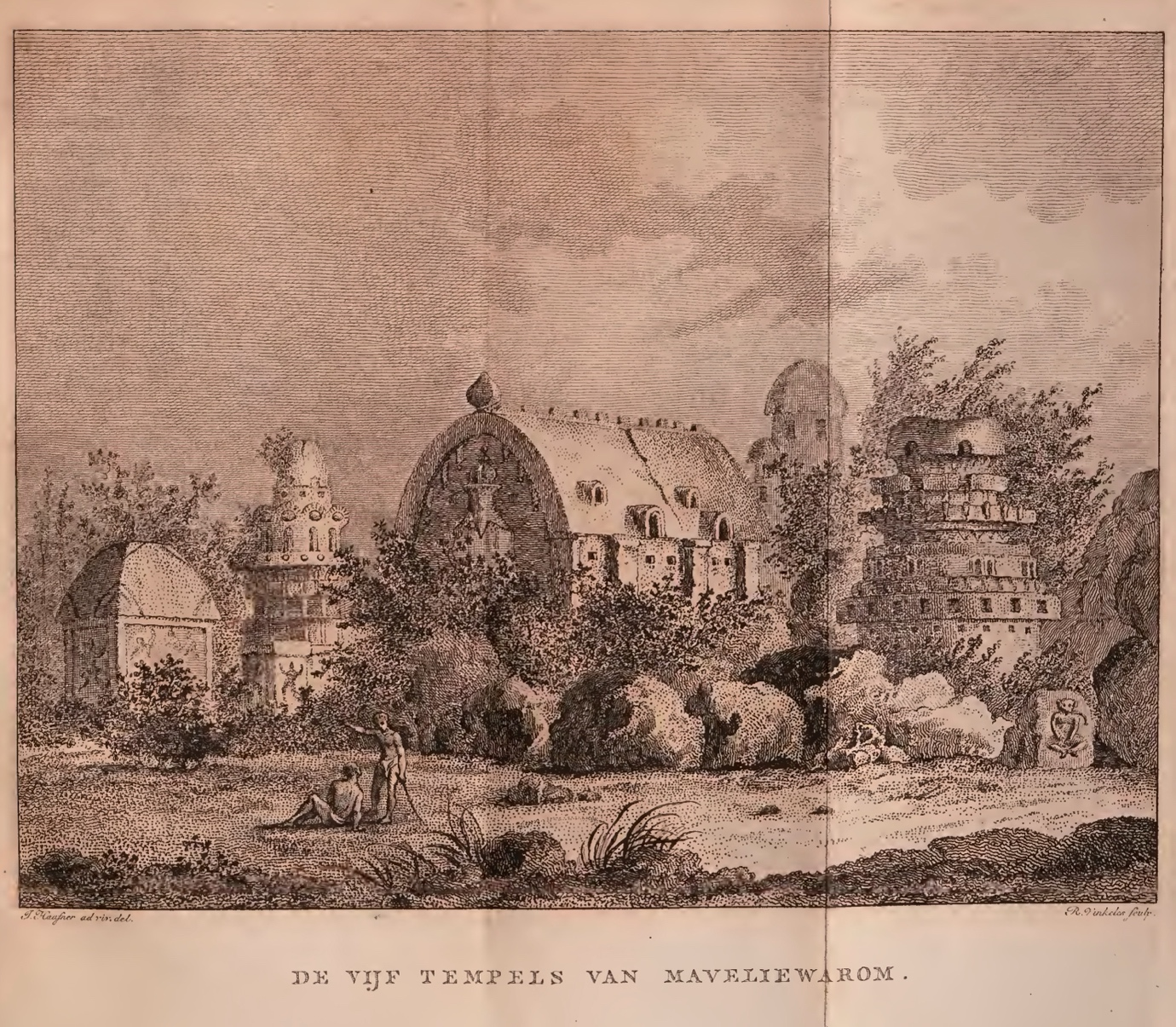
- Item Number
- 3
- Title
- Reizen in eenen Palaquin (Travels in a Palanquin)
- Author
- Jacob Haafner
- Date
- 1808
- Country / region
- The Netherlands
- Source language
- Dutch
- Time period
- 1800-1820
- Description
- A translation of an excerpt from a Dutch 18th-century travel account by the Dutch East Indies Company (VOC) clerk and merchant Jacob Haafner, an early critic of colonialism and celebrated travel writer in the early 19th century. The text contains his observations on the famine of 1782 that shook the Madras Presidency and, in Haafner’s eyes, illustrated the inhumanity and barbarism of the British in India.
- Translated text
-
“Madras had become a horror to me. Wherever I looked, I found cause for sadness and vexation. Even on the faces of the natives I thought I could see a kind of inner bitterness and profound dejection; it appeared to me that they blamed every Englishman walking past for the death of a father, a mother, wife, and child, or a family member! Perhaps my imagination contributed much here. The loathing that I always felt for the English nation seemed to increase here – walking among them felt like walking in a wasteland, surrounded by wild animals always at the ready to devour me.
All the grim scenes, all the horrors that I had witnessed in this city, once again hovered before my eyes; I remembered seeing these streets teeming with living skeletons and terrifying figures who, tormented by the worst hunger, swarmed around each other, much like ants whose nest has been exposed to daylight by the farmer’s spade.
Especially here, on this large square surrounded by beautiful and stately houses where wealth and abundance reigned, one saw all things that inspire horror, fear, and pity – everything that could bring about the most dreadful distress and wailing in humankind came together here.Here one saw creatures, whose appearance would fill the bravest of men with fear and pity. Nothing is as chilling as seeing a human being emaciated by a slowly gnawing hunger. The unkempt hair, the deep sunken eyes, the hollow cheeks, the dilated nostrils, the curled lips showing the teeth to their roots, the protruding sternum, and the belly shrunk to the spinal cord, the sharp bones, nerves and muscles, only covered by dry, wrinkled skin…; one saw thousands of such humans wandering about, young and old, man and woman. It was an unending battlefield! – Dead bodies and the dying lay on top of each other, like the fallen trees of a forest where a hurricane has raged. From all sides came the crying and lamenting voices of the suffering, who, torn by terrible hunger, crawled like insects at the doorsills of the inhumane Englishmen, and raised their arms to beg for a little food, while these monsters sat on their balconies debauching with their whores and making the raging hunger of these unfortunate people even more unbearable by the sight of food. There one saw the rich man and Lazarus, the most shameful contrast to the eye of the attentive observer and the heart of the humane and feeling man.
Dying is nothing; but to see one’s wife, one’s children, one’s parents waste away from starvation, and see them die in gruesome convulsions – is more than dying!
Oh! If only I am reminded of the ghastly images that I saw in Madras, cold shivers run down my spine. Never will I be able to forget them! True, the veil of time has covered them somewhat, but its attempts will never be able to wipe out the impressions they made in my soul, and the sight of the thousands of human beings who died the worst of deaths still haunts me on sleepless nights.But one may ask, was it then impossible to give support to these poor, innocent Indians? Was no help offered, no assistance provided, to save the lives of so many thousands of people? Were no provisions available at all in the city?
Oh yes, dear reader! Those who had enough money to pay the extortionate prices of the English usurers and their agents could buy them. The warehouses of the English Company and several private merchants were amply stored with all kinds of grains; there was enough to feed double the number of people who were then in the city for a long time. Only those who had money could still receive food from them at an astonishingly high price, but those who had nothing, which was the case for most of the wretched Indians who had left everything they possessed in the world behind when they fled to Madras – for them there was no other fate but dying from hunger. No one cared; no one showed concern about them; their miserable condition did not in the least move the petrified hearts of these savages [the English]; they showed no affection or compassion; no attempt whatsoever was made to prevent this terrible destruction of human beings.
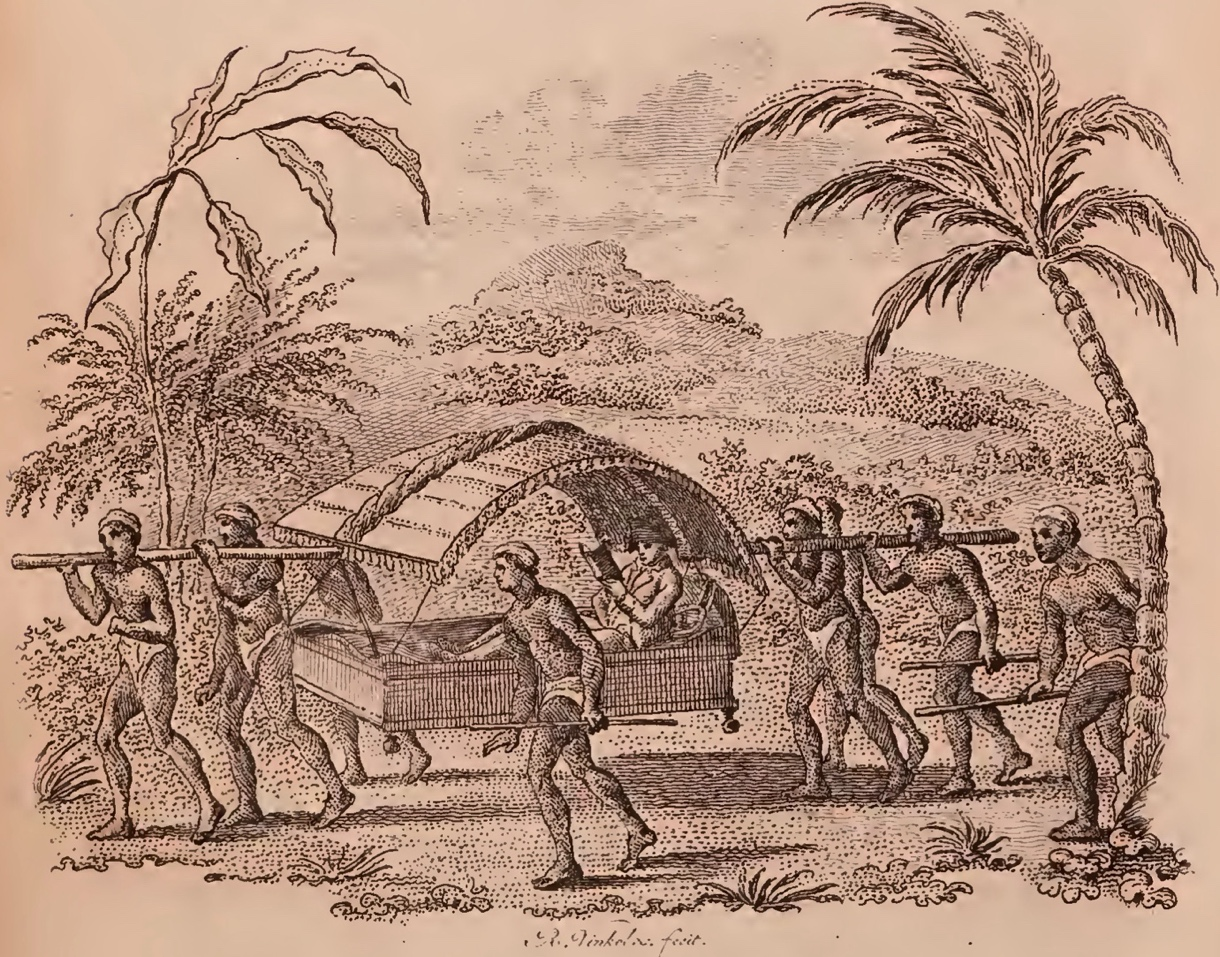
These Christians, who like to pride themselves on their religion, a religion that has charity at its foundation, and whose Founder embodied love for humankind, – alas, they walked past while talking, while singing or whistling; they walked between the scattered corpses and the dying, with that rude and offensive pride so characteristic of them. From their palanquins or whiskies [a kind of carriage], they looked down on the perishing people with a disdainful and pitiless look, while the latter were lying in the dust, wrestling with death, or breathing their last under the most horrible torture of hunger.
That one can go to battle with indifference, and see one’s comrades and friends fall without caring at that point of time, that one can march over thousands of the defeated, this can all be understood; habit and necessity can make a man tough and unfeeling; but that one walks indifferently and coolly among thousands of good-natured and innocent people dying of hunger, without being touched, without any compassion or sadness – that one can only do with the heart of… an Englishman in India.
I observed them closely; sometimes I deliberately stood still for half an hour to watch the English passing by, and I declare openly here, that I saw not the least trace of compassion on the face of any of them for the innumerable wailing beings lying scattered about on the ground before them; even worse, I saw their Ladies, those sentimental tender-hearted creatures sitting in their palanquins with the same cool indifference when they were carried right through this field of massacre. Perhaps there were some among them who would get a fit at the sight of a cat or faint because of a spider! Yes, these European ladies I saw strolling intrepidly through this field of death, laughing, talking, and frolicking with their chaperons or lovers. – Abominable!
Heaven knows how the English ever got the name of being a magnanimous nation, a nation of philosophers, and what not! In India, in any case, they are bloodthirsty and cruel tigers in human shape; if you want to really get to know them, you should go there. Certainly there are some good people here and there, but they must be few and far between; for among the great many Englishmen of position and rank that I dealt with, I have known only two who possessed true humanity, without distinguishing according to status and prejudice, who abhorred the acts of violence inflicted by their fellow countrymen on the unfortunate natives, and who stepped into the breach to protect and defend the latter.”
- Annotations
-
- The Dutch-German clerk and merchant Jacob Haafner arrived in India in 1772 as a 17-year-old and started working in Nagapattinam in today’s Tamil Nadu for the Dutch Vereenigde Oostindische Companie (VOC or United East Indies Company). He would travel back to Europe only fifteen years later in 1787, after having spent time in several parts of India and Sri Lanka. He passed away in Amsterdam in 1809.
- While reporting about a visit to the city of Madras in 1786, Haafner explains that he didn’t go out much because of his experience of the Madras famine four years before. He then gives a chilling account of the famine, its effects, and the behaviour of the British.
- Jacob Haafner’s travelogues were published in Dutch originally and translated into a series of European languages in the first decades of the 19th century.
- Complete title
- Reizen in eenen Palaquin of Lotgevallen en merkwaardige aanteekeningen op eene reize langs de kusten Orixa en Choromandel
- Author details
- Haafner, Jacob, 1754-1809
- Date of publication
- 1808
- Dates of travelling
- 1771-1787
- Publisher
- Johannes Allart
- Place of publication
- Amsterdam
- Archival source or library
- n.a.
- Locations in India
- Madras
- Keywords
- Madras, famine, 1782, British colonialism, East India Company, inhumanit
- Related literature
-
A biography with excerpts from Haafner’s work can found in Paul van der Velde, Life Under the Palms: The Sublime World of the Anti-colonialist Jacob Haafner, translated by Liesbeth Bennink (Singapore: National University of Singapore Press, 2020).
- Translator and copyright
- Jakob De Roover, 2025