
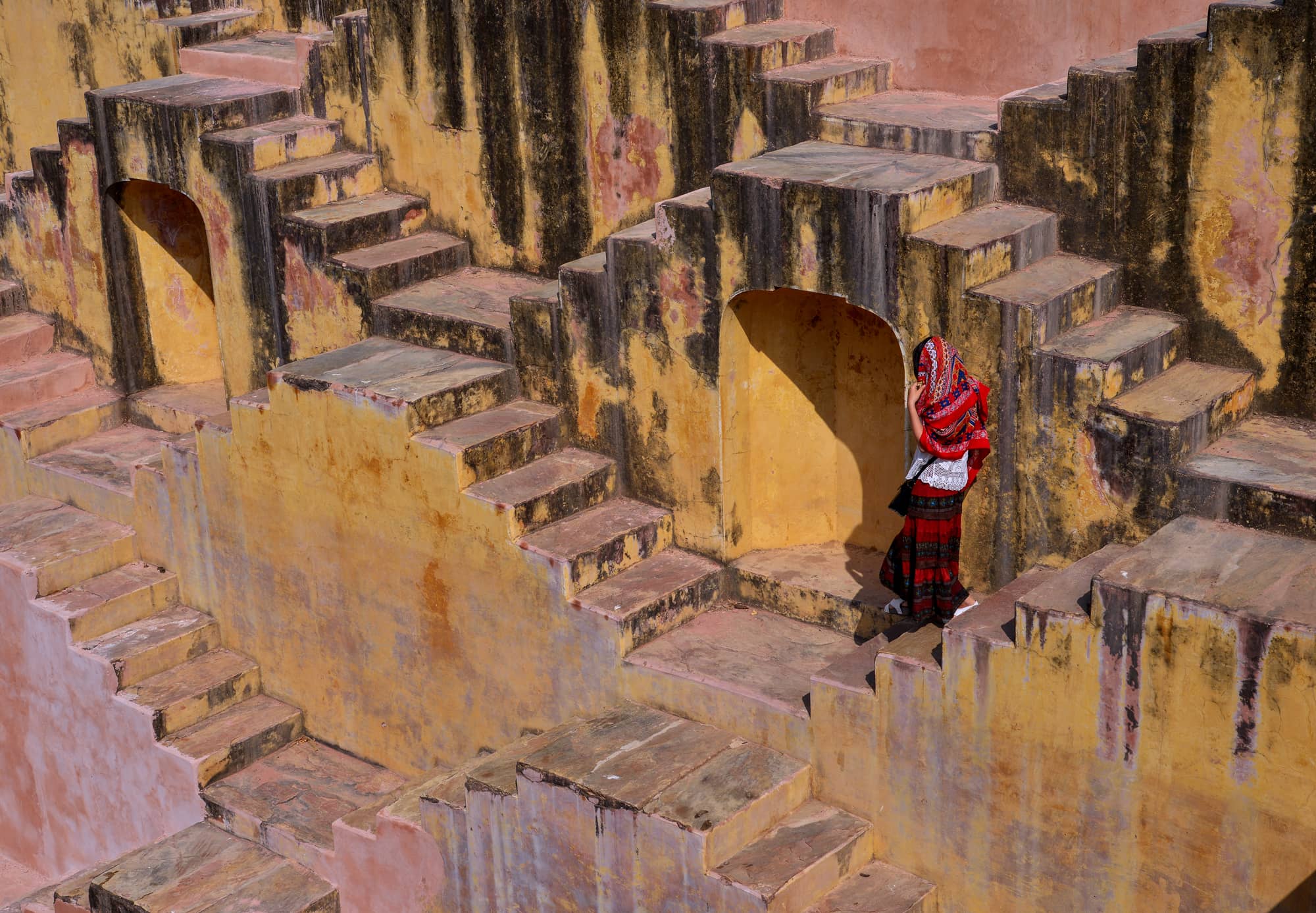
Delhi: The Last Capital of the Turkish Rulers
Item
- Item Number
- 32
- Title
- Delhi: The Last Capital of the Turkish Rulers
- Author
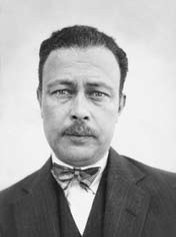
- Falih Rıfkı Atay
- Date
- 1943–1944
- Country / region
- Turkiye
- Source language
- Turkish
- Time period
- 1940-1960
- Themes
- Art and architecture
- British India
- Colonialism
- Europeans in India
- Gender
- Islam and Muslims
- Law
- Politics
- Race
- Religion
- Society
- Stereotypes
- Women
- Description
- Translation of a major Turkish journalist and politician’s report of his sojourn in Delhi.
- Translated text
-
The Duality of Cantonment and the Old City: In Indian cities, one frequently encounters the dual terms "Cantonment" and "the Old City". As British military camps transformed into permanent settlements, a "New City" would emerge, complete with wide streets, parks, clubs, and swimming pools tailored to the climate. This New City embodies the tastes of the nature-loving British. Connected by a broad avenue, it stands in stark contrast to the old town's piled-up, tangled neighborhoods, picturesque bazaars, and constant hum of activity. British administrators look after public health and monuments but do not force changes on native life. Westernized Indians move to the New City, furnish their homes in European style, and enjoy access to luxury hotels and clubs. English guidebooks even advise against using the word "native," as it is deemed an insult, suggesting that Indians be treated as fellow citizens .
The Pace of Change and Nationalism: With the awakening of nationalism over the past twenty years, change has proceeded at a dizzying pace. While the masses remained stationary, the upper classes rebelled passionately against the old European-native divide. This is exemplified by an anecdote where an Indian minister of an autonomous province summoned a British police chief. When the chief replied he was at the cinema, the minister sent a stark warning: "Do you still think we live in the old days?" .
Architecture, Climate, and Seasonal Migrations: The British administration prioritized constructing monumental courthouses for the local population. The English house adapted to the Indian climate is typically single-story with high ceilings, surrounded by columned verandas that allow free air circulation. Despite these designs, Europeans can only endure the tropical heat for a few months. Unlike the era of the old Turkish sultans when reaching a cool mountain on an elephant took two months, express trains and airplanes now reach Kashmir or other hill stations in hours. Consequently, the government in Delhi migrates to Simla for several months. In addition to the boiling heat, a persistent desert dust chokes the breath in Delhi. The author quotes the Istanbul tambur player Artuin’s vivid description of this climate from his memoirs: trying to wrap himself in a wet sheet while smoking a hookah, Artuin could never enjoy both comforts simultaneously because the sheet would dry before the pipe was lit, and the pipe would go out by the time the sheet was re-wetted. During extreme heat, wealthy locals, maharajas, and princes travel to Europe, which represents a kind of liberation where they can cast off the heavy turban of hypocrisy and escape endless flatterers.
New Delhi: The Eighth City: An old legend states that Delhi will be built nine times, and the ninth will be the last. Shah Jahan built the seventh, and New Delhi is the eighth city, standing as a proud monument to British civilization. In 1398, Timur plundered and burned this Turkish city before returning to Samarkand. Delhi was the last capital of the author’s Turkish (Mughal) rulers. The British moved their capital here from Calcutta in 1912. The city planning accounts for a population approaching half a million, including 180,000 Muslims, and sits equidistant from Karachi, Bombay, and Calcutta. Along the streets, young trees are protected from the sacred cow by low brick walls. One frequently encounters ox-drawn carts and completely covered palanquins (litters) carrying strictly veiled Muslim women whose eye-slits are concealed behind tiny curtains. To the left stands the magnificent, red-stone Delhi Fort where the last Mughal ruler was imprisoned. The commercial center of New Delhi features wealthy shops surrounding a colonnaded square that resembles a European boulevard, leading into a monumental government quarter built of carved stone. The grand, harmonious architectural ensemble makes the author regret how the original open plan of the government quarter in Ankara was altered.
War, Mentality, and Hospitality: Due to the Second World War’s halting of tourism, Delhi's large hotels are currently occupied by soldiers. The author observes a contrast in military mentalities: while countries like Turkey strictly close off military exclusion zones (such as restricting access to İzmit Bay or Kilyos) , the American commander in Delhi opened the hotel's public lounges, restaurants, and grill rooms to the civilian public, confining military secrets behind guards on the upper bedroom floors. The traveling Turkish journalist delegation received immense, warm attention from both Hindu and Muslim newspapers and communities, who bombarded them with letters and invitations. Local government guides offered the delegation total freedom to modify their schedule and meet anyone privately. Many youths gathered outside the hotel rooms simply to shake hands with the “Turks of Turkey” and express brotherly affection, asking: “You won't enter the war, will you? Do you still see danger ahead?”.
- Annotations
-
- This text records the detailed observations of a Turkish journalistic delegation visiting India during the height of the Second World War. It provides a critical comparative framework analyzing the dual urban structure of sömürge (colonial) India—segregated into British-designed New Cities and traditional Asian Old Cities. The author continuously references architectural planning, drawing stylistic parallels and grievances regarding the early republican urban planning of Ankara. Furthermore, the text acts as a valuable record of rising mid-20th-century nationalism, Islamic-Mughal heritage awareness , and the deep, politically detached brotherly affection felt by both Hindu and Muslim populations toward the Republic of Turkey during WWII.
- The author, Falih Rıfkı Atay, was a prominent Turkish journalist, author, and member of parliament. The translator of this item has identified him as the author of the text based on prose style, travel delegation context, and specific Ankara comparisons.
- The text was published in 1944-1948, originally serialized as travel logs or compiled into Falih Rıfkı Atay’s travelogue.
- Complete title
- Delhi: The Last Capital of the Turkish Rulers
- Author details
- Falih Rıfkı Atay (1894–1971)
- Date of publication
- 1944–1945
- Dates of travelling
- 1943–1944 (During World War II)
- Publisher
- Semih Lütfi Erciyas
- Place of publication
- Ankara / Istanbul, Turkey
- Archival source or library
- n.a.
- Locations in India
- Delhi, Simla, Kashmir, Bombay, Calcutta, Karachi
- Keywords
- Colonialism, British India, New Delhi, Mughal (Turkish) Empire, Pan-Islamic Connection, World War II, Press Delegation
- Related literature
-
Falih Rıfkı Atay, Hint (1944); Tamburi Artuin, Tevarih-i Enderun (The Chronicles of the Internal Court / Memoirs).
- Translator and copyright
- Elif Öcalmış, 2026
- Media
 Imagem2.jpg