
A Turkish Professor at Delhi Customs
Item
- Item Number
- 33
- Title
- A Turkish Professor at Delhi Customs
- Author
- Niyazi Berkes
- Date
- 30 August 1958
- Country / region
- Turkiye
- Source language
- Turkish
- Time period
- 1940-1960
- Description
- Translation of an excerpt from the Turkish-Cypriot sociologist and historian Niyazi Berkes’s “Letters from Asia,” which recounts his experiences in Delhi on the way to Aligarh Muslim University, where he was heading as a visiting professor.
- Translated text
-
New Delhi
Jan Path Hotel
August 30, 1958
I have not yet gone to the city of Aligarh, where Aligarh University is located and where I am to go as a visiting professor. The means I resorted to in order to make contact with them — post, telegraph, and the like — came to nothing. This business too, it seems, has drowned in red tape.1
Speaking of red tape, it brings something to my mind. I touched on it in my last letter but could not write it out: just as during our own era of statism2, India too is under severe foreign exchange control. Foreigners coming and going may bring in things like automobiles, radios, cameras, or film cameras only up to a certain value. Anything exceeding one [unit of] value must be taken out again upon departure so that no profit can be made by selling it inside. A sound policy, this, for poor countries.
But for the bureaucrats, who clearly understand these matters, a new day has dawned3, not because of the risk of abuse, mind you, but because of their not knowing how to carry out bureaucratic procedures. And also out of the officials’ fear of taking on responsibility.
And so, no sooner had I arrived in Delhi than I encountered the first example of this at the airport customs. On my shoulder I had a film camera I had bought in Switzerland, and the “zoom”4 lens, bought in France, attached to it. A thing like a pipe or a whistle. When I declared the price of these two, trouble was loosed upon my head
I kept saying, “Let me pay the custom’s duty on it.” It did no good. These items were promptly put into a sack. The day was Sunday. The customs officers were apparently not in that day. Red sealing-wax5 was sought, found; the sack was sealed. “Well, what now?” I said. A whole crowd of officials (what sort of officials, I don’t know): “Don’t worry at all. Go to the Ministry of Finance tomorrow, pay the duty, and that’s that,” they said.
Going to a place as lofty as the Ministry of Finance for such a trifling matter struck me as strange, but what of it, I’ll just go and get it, I said to myself.
Thanks to the usage of English, finding one’s way and the streets here is not a difficult thing. But at the Jan Path Hotel where I was staying, every head began to give out a different sound [everyone gave conflicting directions]. I paid no mind. By asking and asking, we found the ministry. But don’t think this an easy job, as it would be in Ankara. Overhead, a terrible sun. I have not yet learned how to dress for this climate. I am drenched in sweat from head to foot. But above all, there is the matter of breaking through the ranks of beggars, as numerous as flies. We in Türkiye are not people who have never seen a beggar. But begging as a thing must be seen here. It is practically an institution. As if a “caste.”6 Drive off one or two “anas,”7 and ten more come; they too demand, as if it were a professional right. If you don’t give, they fall in behind you; you end up wandering the streets with an army of beggars at your back. Sometimes they pronounce a “curse”8 behind you. If that too fails to work, sometimes they begin to insult you. Once this happened to me as well; besides the insults, I was nearly subjected to an assault.
But let us be fair. These people are unemployed. Poor. If you gave each of them ten para9 in our money, this would practically be a fortune. Were a fairly rich visitor or a tourist to give each of a hundred beggars ten para, it would not amount to even one cent in 25-kuruş American money10. A charity cheaper than water. But the issue is not the money. It is the loss of time. And even that is not important to me. The thing that truly cuts me to the quick is that it shows how pitiable a state this country’s economic life is in. Because I count these people as “one of us,”11 I grew very sorrowful.
When I came to the Ministry of Finance and made my first inquiry, I lost hope of getting the camera back. First of all, the officials were occupied not with the camera but with me. How was it known that I was the owner of the camera? The passport and the receipt in my hand did no good.
After that, proving this cost me a whole week. Slips, the neighborhood headman’s office12, stamp upon stamp; and at last — from kneeling before those who know how to fill out a slip and have made a profession of it, like the typists in Karaköy13, the petition-writers,14 sitting cross-legged and barefoot whose typewriters go tak, then another tak — to signature, fingerprinting, baksheesh, fee… we passed through all these stages. For a week I was utterly worn out.
At last, equipped with these documents, we came to the Finance Ministry. The official gentleman was very pleased. I had done everything properly.
The official took my passport and my receipt too; making them all into a bundle, with a skewer resembling a kebab skewer15, he pierced the whole lot right through the middle, before I could even say “good heavens, what are you doing, my passport and all,” and tied them up with a string like the salads sold during Ramadan16 and placed it into the office attendant’s hand.
After that, our document-salad17 began making the rounds of the rooms and floors of the finance building. Each time, the scroll swelled even more. The reason they pierce the documents with a skewer and make them into a scroll is this: since the attendants are illiterate, they could turn the documents into a “shepherd’s salad,”18 or drop them, lose them. Once I learned this, I stopped being angry that my passport had been pierced right through the middle. I was even pleased.
The only official in this office who knew his job was a “Sikh.” (You know, those people who don’t cut their beards and hair, whom we used to see in the British army and, because they were turbaned,19 took to be Muslims.) He examined the documents. Stretching his head out from his window, in a low voice he said to me: “Professor,” he said, “all these procedures are pointless. You are not subject to this customs duty.” The man had also learned from the documents that I was a professor. With the fear that I was being lured into a new game, or that the man would probably ask for a bribe, I said: “How can that be, the value of the things in the sack is such-and-such” (I had not yet even seen the face of the sack). He laughed. “Look,” he said, “there is a film camera, complete with its own lens. Its price is such-and-such, yes? And there is also a separate device, a ‘zoom lens,’ correct? Its price too is such-and-such. The value of neither of these two items reaches the threshold subject to duty. You can take pictures with your camera even without the zoom lens. On this account no duty can be charged from you.” I was dumbfounded before this devilish cleverness of the Sikh official.
He sat down, wrote something. Again passing it onto the skewer, he sent it to the office director on the upper floor. After a while the attendant came back. The Sikh called me again. “He doesn’t accept it,” he said. “These men are so ignorant of the regulations that we can’t get any work done. We are drowning in papers.” I said: “All right then, my dear fellow, I’m not insisting. Let me pay whatever the duty is.
[…] “Let me teach you a method, and watch how you’ll get your camera back at once,” [the Sikh] said. “Here you are treated like just anyone among everyone20. That won’t do. The officials take pleasure in giving you a hard time. Out of their cunning, they imagine that if no work is left to do, they’ll go hungry21. Do you have a card showing, in English, that you are a professor?” “I do.” “Write something on it addressed to the director,” he said. “You’ll see how he’ll receive you two minutes later.”
The attendant took my card and went upstairs, and came right back. I was shown in. The director was sitting at an elaborate desk, in a white uruba resembling a robe. His bare feet were visible in the gap between the two side cabinets of the desk.
“Sir,” he said, “these officials are ignorant. They don’t know the regulations. That’s why they make important persons like yourself suffer. I’ll give the order now; your camera will be handed over to you at once.” Thanking him, I left. Never in my life had I seen such a fast and such a [sour] business, like cabbage pickle22. When I went down with the attendant who’d been waiting at the door as a relay, the Sikh official understood at once from my face. “The officials, it seems, were ignorant; he apologized,” I said. Between his lips he muttered: “The good-for-nothing23, the truly ignorant one is he himself.”
I had come to admire the man. Earlier, out of fear that he’d ask for a bribe, I had thought long and hard about the give-or-not-give question. In the end I had reached the conclusion that even if I wanted to, I would not be able to give one. Because never in my life have I managed this business. As you know, in 1939 when I came back from America, I had sent three or four crates of my belongings by a shipping company. When they arrived, the company’s Istanbul agent informed me to go to Galata24 and collect them. Most were books. There was a radio, and a typewriter too. Whomever I asked whether these were subject to customs duty or not:
“Forget that,” they said. “You’ll give a bribe, and then it’ll pop right out,” they said. I:
“Good heavens, how is a bribe given? I don’t know such methods. How, facing the fellow, without both his face and mine turning red, am I to give a bribe?” I said.
A friend named Hulûsi laughed a great deal at this. He taught me a more refined method25:
“Put five papel26 inside a cigarette packet. When you hold out the packet to offer the official a cigarette, he understands. As he takes a cigarette, he takes the five-papel note along with it.”
I could not do this; I would not be able to. When I went to Galata, it turned out that the goods unloaded from the ship were in the Beşiktaş depot. To curry favor with the official, and so as not to let the matter sink into “come today, go tomorrow,”27 I said I would hire a taxi. The man dragged his feet, but in the end he agreed. In my pocket I had a five-papel note and a packet of Yenice.28 From Tophane all the way to Beşiktaş I kept turning it over — would I do this thing or wouldn’t I? I couldn’t reach any firm conclusion, just my luck. We entered the depot, found the crates. I told them what was inside; they opened them here and there. The official affixed his signatures; the crates were handed over to me. I could give the man neither a cigarette nor the note. I shook his hand, thanked him. He showed not the slightest impropriety. He even declined my offer to bring the goods by taxi.
In the finance building in Delhi, this is what came to my mind. In my pocket I had a packet of American cigarettes, used up by a third. By way of thanks, I held it out to the man. Taking one cigarette from inside, he handed the packet back!29 He assigned the attendant (the poor man resembled a barefoot beggar) to accompany me. We crossed corridors. We came to a place covered with iron bars. My camera-sack was waiting there.
At a time when I had just set foot in India, this incident made me think a great deal. Had they grown accustomed to this red tape over so many years under British rule? Or was it that, once the British left, their Eastern-ness30 had kicked back in? […].
- Annotations
-
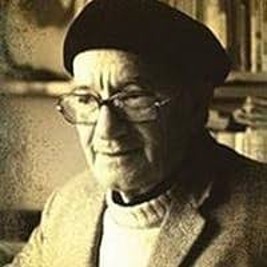
The author, Niyazi Berkes, was a Turkish-Cypriot sociologist and historian, professor of sociology at Ankara University and later at McGill University, Montreal; he was known for his work on secularism and modernisation in Turkey.
- Kırtasiyecilik literally means “stationery-mongering” the excessive use of paperwork, and is the standard Turkish idiom for bureaucratic red tape. Berkes plays on the word in the next paragraph (“Kırtasiyecilik dedim de aklıma geldi” — “Speaking of red tape, it brings something to mind”), a pun that does not fully survive translation.
- Devletçilik (“statism”) refers to the étatist economic policy of the early Turkish Republic, especially the 1930s under Atatürk, when the state heavily controlled industry, trade, and foreign currency. Berkes draws a pointed comparison between Nehru-era India’s controlled economy and Türkiye’s own earlier experience.
- “Gün doğdu” (“the day dawned” / “a new day has dawned”) is idiomatic for an opportunity or windfall arriving. Berkes uses it ironically: the cumbersome rules become an occasion for officials to display their incompetence and risk-aversion rather than for genuine corruption.
- The English loanword “zoom” appears in quotation marks in the original, signaling its novelty to Turkish readers of 1958. His self-deprecating description of it as resembling “a pipe or a whistle” (boru ya da düdük) conveys the object’s exotic, faintly absurd appearance to the readers of that time.
- Kırmızı ıstampa mumu — red stamping-wax used for official seals. The detail of officials hunting for sealing-wax on an unstaffed Sunday underscores the improvised, ceremonial character of the bureaucratic ritual Berkes is satirizing.
- “Kast” (caste) appears in quotation marks in the original — Berkes signals it as a foreign/Indian sociological term, applying it half-ironically to organized begging. The quotation marks reflect the word’s novelty in 1950s Turkish.
- “Anas” — Berkes’s transcription of the Hindi/Urdu word anna, the pre-decimal coin worth 1/16 of a rupee. He uses it as shorthand for the small coins beggars request.
- “Beddua” — a malediction or curse invoking misfortune, the opposite of a blessing (dua). Berkes puts it in quotation marks to mark the beggars’ practice as a distinct, almost ritual act.
- Para and kuruş are Ottoman/Turkish currency units (40 para = 1 kuruş; 100 kuruş = 1 lira). Here para is the tiny denomination. Berkes is converting Indian alms into the smallest Turkish coins to dramatize how negligible the sums are.
- The comparison is deliberately dizzying: a hundred beggars each given ten para would still not equal a single U.S. cent. Berkes layers three currencies (Indian, Turkish, American) to underline the scale of poverty.
- “Bizden” (“[one] of us”) in quotation marks: Berkes feels kinship with the Indian poor as fellow members of the formerly colonized / developing world — a key sentiment in this Cold War–era travel narrative, where a Turkish intellectual identifies with India’s postcolonial condition.
- Mahalle muhtarlığı — the office of the muhtar, the elected head of a neighborhood (mahalle) in Türkiye, responsible for low-level civil documentation. Berkes maps the Indian bureaucratic process onto its Turkish equivalent for his readers.
- Karaköy — a commercial district in Istanbul. The comparison localizes the scene for Turkish readers familiar with the public typists there.
- Arzuhalci — a traditional scribe/petition-writer who, for a fee, drafts official documents and petitions for the illiterate or those unused to bureaucracy. The barefoot, cross-legged typists clattering away are Berkes’s vivid image of the same trade in India.
- Kebap şişi — the metal skewer used for grilling kebabs. Berkes’s comparison of the bureaucratic spike-file to a kebab skewer is part of the running culinary imagery (skewer → salad → scroll) he builds throughout this passage.
- “Ramazanlarda satılan salatalar” — salads (or pickled/bundled greens) sold by street vendors during Ramadan evenings in Türkiye, tied with string. The simile localizes the image for Turkish readers and continues the food motif.
- “Evrak salatalığı” — literally “document-salad,” Berkes’s own coinage extending the salad metaphor to the absurd bundle of papers skewered together.
- Çoban salatası (“shepherd’s salad”) — the classic Turkish chopped salad of tomato, cucumber, onion, and pepper. Here it means a chaotic, jumbled mess; Berkes puns on the literal meaning (papers scattered like chopped salad) against the bundled “scroll.”
- An ethnographic aside for Turkish readers: Berkes explains that Sikhs, uncut hair and beard, turbaned, were commonly mistaken for Muslims by Turks who had seen them serving in the British (colonial) army. This is a small but telling moment of a Turkish observer correcting a common Turkish misperception about South Asian religious identity.
- A wry comment on how rank, not rules, moves things.
- A sharp piece of social observation: the clerks obstruct work because they fear that efficiency would make their jobs redundant, busyness as job security. Berkes presents this as the psychological root of the red tape he’s been satirizing.
- “Böyle perhiz, böyle lahana turşusu görmemiştim” — literally “I had never seen such a fast [diet/abstinence] and such cabbage pickle.” This plays on the Turkish proverb “Bu ne perhiz, bu ne lahana turşusu” (“What [kind of] fasting is this, [next to] this cabbage pickle?”), said of glaring inconsistency between stated principle and actual behavior — here, the contradiction between the obstructive clerks downstairs and the instant, fawning compliance of the director upstairs. The proverb is essentially untranslatable; the literal image is kept and explained here. This continues Berkes’s running food-metaphor thread (kebab skewer → salads → cabbage pickle).
- “Hergele” — a strong insult: literally a herd of untamed pack-animals, used to mean a worthless, ill-bred scoundrel (“good-for-nothing,” “lout”). The Sikh mutters it about the director under his breath, the page’s punchline, confirming that the truly cahil (ignorant) one is the very official who called his subordinates ignorant.
- Galata — the old port and customs district of Istanbul. This begins a flashback to 1939: Berkes returning from his studies in the United States, unable to retrieve his own crates without paying a bribe, which he is constitutionally incapable of doing.
- “Daha terbiyeli bir usul” — “a more refined/well-mannered method,” i.e. a more genteel way of giving a bribe without the awkward face-to-face embarrassment.
- Papel — slang for paper money, a banknote (here, a five-lira note). Originally from Spanish/Italian papel/papello (paper), it entered Turkish underworld and colloquial speech. It is kept transliterated to preserve the slangy register that marks this as the disreputable language of bribery, fitting since it is Hulûsi’s coaching.
- “Bugün gel, yarın git” — literally “come today, go tomorrow,” an idiom for being endlessly put off, sent away repeatedly without resolution, the classic experience of being stonewalled by officialdom.
- Yenice — a well-known brand of Turkish cigarettes.
- The exclamation mark is Berkes’s. The Delhi official’s gesture, taking a single cigarette but returning the packet, is the moral mirror-image of the bribe scenario: a small but pointed instance of incorruptibility that surprises and impresses him, paralleling the honest Istanbul official.
- Şarklılık — “Eastern-ness / Orientalness,” the quality of belonging to the East (Şark). This is a crucial term: Berkes poses an explicitly Orientalist question — is the dysfunction a colonial inheritance from British rule, or an intrinsic “Eastern” trait that reasserted itself after independence? The framing is significant precisely because Berkes, himself a Turkish “Easterner,” is wrestling with an internalized Orientalist binary, even as his “bizden” identification complicates it. Berkes uses the Indian bureaucratic encounter as a mirror to reflect back on Turkish bureaucracy and corruption, so the satire is never simply “the foreign observer mocking India.” The recurring detail of the competent, sardonic Sikh official, who out-thinks the entire ministry and privately calls his boss a hergele, is the moral center of the episode: Berkes’s sympathy lies with the sharp-witted subordinate against the robed, bare-footed, status-conscious director. The 1939 flashback then universalizes the problem (it exists “back home” too), reinforcing his “bizden” identification.
- Complete title
- Asya Mektupları [Letters From Asia], pp. 19–23
- Author details
- Niyazi Berkes (1908–1988)
- Date of publication
- 2022 [4th printing of the Yapı Kredi Yayınları edition]. The letters were originally written in 1958–1959; first book edition Çağdaş Yayınları, İstanbul, 1976
- Dates of travelling
- 1958–1959 [the journey through Asia, including Pakistan, India and Japan. This letter is dated 30 August 1958]
- Publisher
- Yapı Kredi Yayınları [YKY]
- Place of publication
- İstanbul
- Archival source or library
- Published book: ISBN 978-975-363-700-4. 240 pp
- Locations in India
- New Delhi [Jan Path Hotel, the airport, the Ministry of Finance]; Aligarh [referenced as the author’s intended destination as a visiting professor at Aligarh Muslim University].
- Keywords
- customs, bureaucracy, red tape, postcolonial India, begging, poverty, Sikh, Orientalism, Turkey-India comparison, travel letter
- Related literature
-
Niyazi Berkes, The Development of Secularism in Turkey (McGill University Press, 1964); Edward Said, Orientalism (Vintage, 1978), as a framework for reading Berkes’s notion of Şarklılık (Eastern-ness); broader literature on Turkish travel writing on Asia and on Turkey-India relations in the Non-Aligned era.
- Translator and copyright
- Elif Güvendi Yalçın, 2026
- Media
 Imagem1.jpg